




































Rosin, an essential component in the craft and performance of string instruments, has long balanced efficacy with practicality. Recently, developments in natural rosin formulations have introduced low-dust options that not only preserve but enhance the tonal qualities and articulation capabilities for violinists, violists, cellists, and double bassists. This progression marks a subtle yet meaningful refinement in how performers interact with their bows and strings, offering tangible benefits beyond the traditional trade-offs.
The Role of Rosin in Performance and Instrument Care
For centuries, rosin has provided the friction necessary between bow hair and strings, enabling precise sound production. Its chemical composition and physical characteristics directly influence a player’s ability to produce a broad palette of dynamics and articulations. However, standard formulations often release fine dust particles that can settle on instruments, bows, and performance spaces. This dust, though inevitable to some degree, can pose challenges for instrument maintenance and potentially affect air quality in enclosed venues.
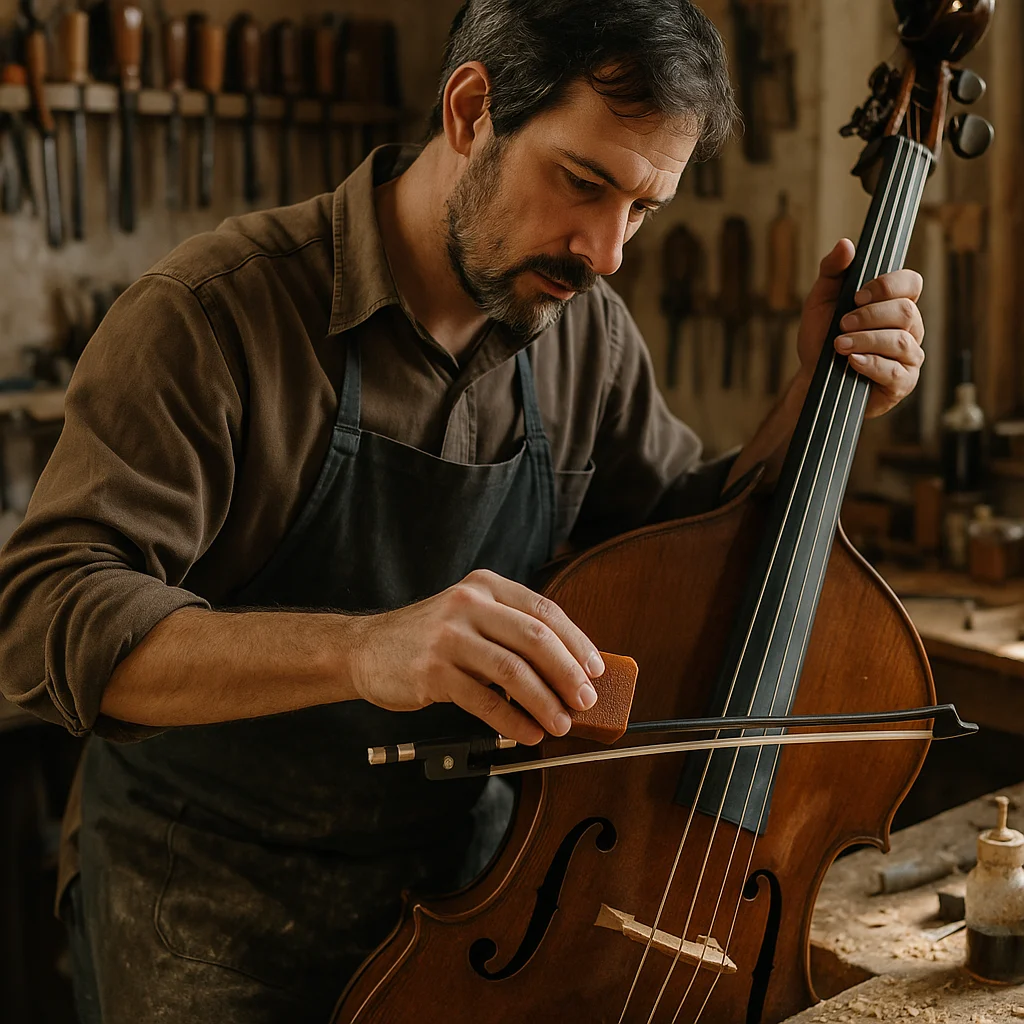
Natural rosin, derived primarily from tree sap, has been the preferred material for many due to its organic origins and specific tonal contributions. Yet, the pursuit of an ideal rosin that minimizes dust without compromising sound quality has been ongoing. The introduction of a low-dust natural rosin aims to reconcile these priorities, enhancing the musician’s experience and addressing practical concerns.
Implications for Players, Makers, and Audiences
Musicians stand to gain noticeably from low-dust rosin through cleaner handling and less frequent cleaning of instruments and bows. This benefit extends to those with heightened sensitivities to dust or with instruments made from delicate materials that require careful upkeep. Furthermore, string instrument makers and luthiers may find these formulations reduce the risk of rosin particle accumulation during setup and maintenance, safeguarding their meticulous work.
Audiences and orchestral communities also indirectly benefit. Reduced dust contributes to better air quality in rehearsal studios and concert halls, environments where many performers share space intensively. Although the change may seem modest, the cumulative effect fosters healthier and more comfortable settings for the creation and enjoyment of classical music.
Context Within the Broader String Instrument Landscape
The introduction of low-dust, natural rosin is emblematic of a subtle evolution in the classical music and string instruments ecosystem—one that seeks to blend traditional materials with contemporary needs. While innovation often centers on new instruments, performance styles, or pedagogical approaches, adjustments to ancillary materials like rosin demonstrate the ongoing commitment to refining every facet of the musician’s toolkit.
Moreover, this advancement aligns with increasing awareness of sustainability and health in the performing arts. By employing natural sources and reducing particulate emissions, the product reflects a conscientious approach to both environmental and performer well-being.
Looking Ahead: Adoption and Influence
As this low-dust natural rosin gains traction, its adoption will likely ripple through educational institutions, professional orchestras, and solo performers. Students and teachers might appreciate the ease of use and reduced maintenance, while seasoned professionals may value the nuanced improvement in articulation and sound. Whether it becomes a new standard depends on sustained positive reception and practical advantages in varied settings.
Instrument manufacturers and accessory producers might respond by incorporating such formulations into their offerings, encouraging further research and development in rosin and related materials. This could spark a broader dialogue on optimizing every element that contributes to string performance, beyond the instrument and bow themselves.
Why this matters
- Addresses musicians’ long-standing concerns over rosin dust affecting instrument care and acoustics.
- Benefits a wide range of stakeholders: performers, luthiers, educators, and concert venues.
- Reflects a trend toward combining traditional materials with practical enhancements to improve performance conditions.
- Has implications for health and sustainability in music-making environments.
- Signals a potential shift in accessory standards that could influence broader aspects of string instrument culture.
Related topics
- The influence of accessory innovations on string instrument sound production.
- Material science and its role in advancing musical instrument maintenance.
- Balancing tradition and modernity in classical music practice and pedagogy.
Editorial Commentary
Instrument-centered articles are valuable because they connect sound, materials, construction, and performance practice. For specialists and enthusiasts alike, they provide insight into the physical objects that stand at the heart of musical interpretation.
Read in a broader way, this type of story helps explain why the history and evolution of the $instrument_label still matter today to makers, performers, collectors, educators, and serious listeners.
About The Violin Post
The Violin Post is an international editorial platform dedicated to violin making, classical performance, competitions, instruments, and the wider culture of the string world.
Its coverage connects news reporting with specialist context for readers interested in performers, makers, educators, institutions, and musical heritage.
Related Articles
- Reimagining Holst’s ‘Mars’: The BBC’s New Instrumental Arrangements Illuminate a Classic
- Stravinsky’s Firebird Suite Finale: A Closer Look at Instrumental Arrangements
- Diapasonix: A Compact Synth Innovates for String Players Using Raspberry Pi Pico 2
— The Violin Post Editorial Staff