












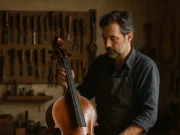

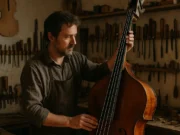








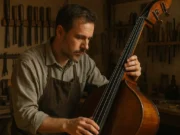













Recent advancements in cello manufacturing have introduced a 3D-printed instrument that incorporates non-warping carbon fiber, modernizing the design principles of a 300-year-old instrument.
Innovations in Luthiery: 3D-Printed Cello Incorporates Carbon Fiber to Enhance Structural Stability – Research & Innovation
The traditional cello, crafted predominantly from wood, is susceptible to environmental factors such as humidity and temperature changes, which can cause warping and require meticulous maintenance. Integrating carbon fiber—a material known for its rigidity, light weight, and resistance to deformation—through 3D printing presents an innovative approach to mitigating these issues.
This development is significant for professional musicians, students, and instrument makers seeking more stable instruments that maintain consistent tonal quality and structural integrity over time. Such innovations potentially reduce the frequency of costly repairs and adjustments often necessary for wooden instruments, especially in varying climates or touring conditions.
Within the classical music ecosystem, experimentation with alternative materials and manufacturing techniques reflects a broader trend of blending tradition with technology to expand performance possibilities and durability standards. While traditional luthiery emphasizes artisanal craftsmanship, additive manufacturing methods like 3D printing can allow for precision, repeatability, and novel design flexibility in instrument making.
Competitions, conservatories, and professional ensembles may observe these advancements closely, evaluating how new materials influence sound projection, playability, and musician preference. Additionally, such technology-driven developments can contribute to diversifying the range of instruments accessible to emerging artists by potentially lowering manufacturing costs and permitting customization.
While still emerging in acceptance, the incorporation of carbon fiber and 3D printing in cello construction exemplifies ongoing efforts in the classical music community to reconcile the heritage of instrument making with contemporary innovations. Continued research and real-world applications will determine how these advancements integrate into traditional practices and their long-term impact on performance and pedagogy.
— The Violin Post Editorial Staff