




































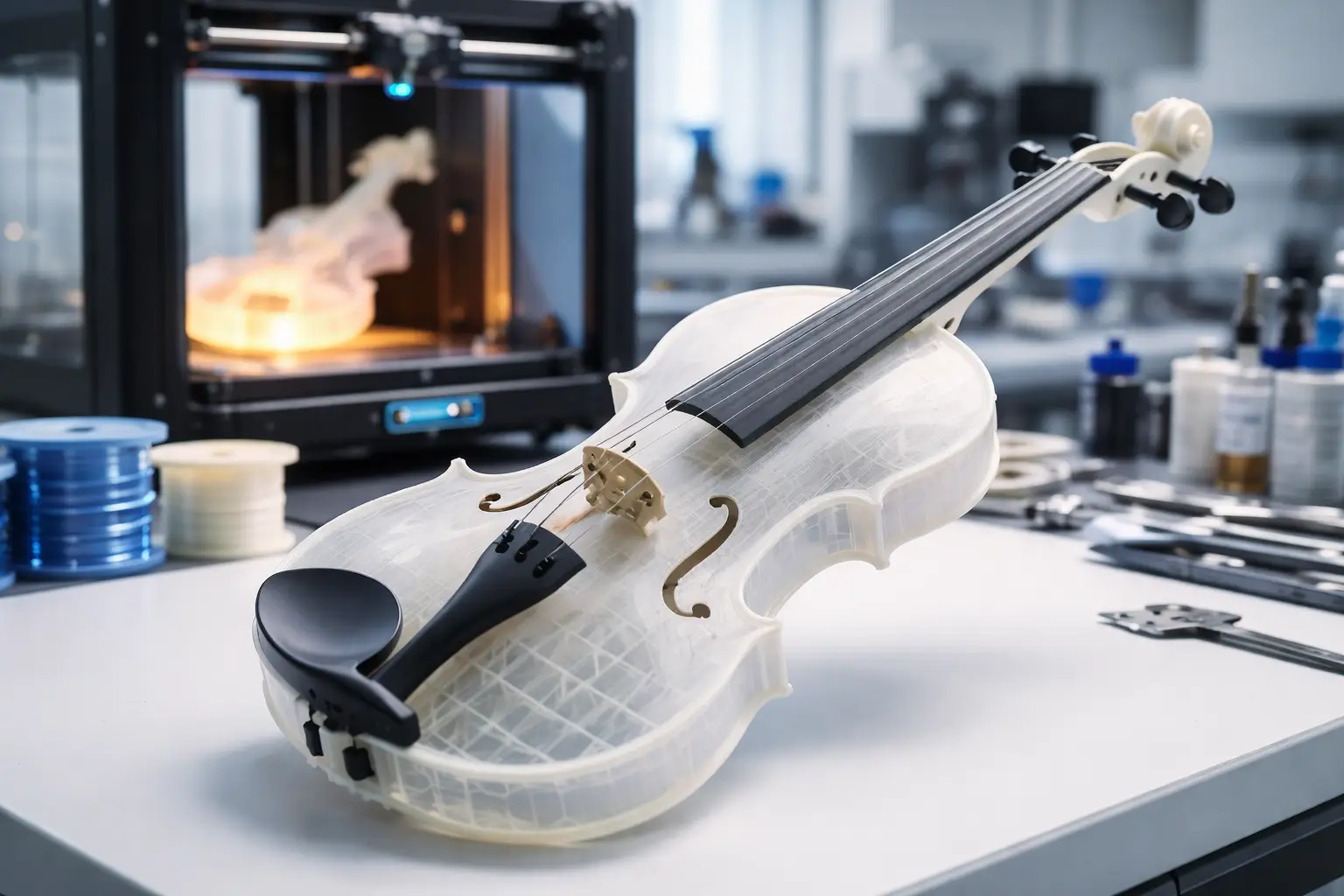
For many aspiring musicians, the violin represents both a passion and a significant financial hurdle. Even entry-level instruments can cost thousands of dollars, placing quality music education beyond the reach of many students. A new initiative, however, may help change that narrative.
Researchers Develop Low-Cost, Durable 3D-Printed Violins for Music Students – Research & Innovation
Researchers involved in the Acoustical Society of America’s AVIVA Young Artists Program have unveiled a low-cost, durable violin produced using 3D-printing technology, designed specifically for students and beginners.
The project was presented in Nashville by Mary-Elizabeth Brown, Director of the AVIVA Young Artists Program, during a talk entitled Old Meets New: 3D Printing and the Art of Violin-Making. Her presentation outlined both the technical development of the instrument and the broader educational goals behind the research.
“Our inspiration came from several directions,” Brown explained. “We wanted to explore the new sound possibilities created by modern materials, take advantage of technologies already used in other disciplines, and make music education more sustainable and accessible by producing instruments that are far more durable.”
How the Violin Is Made
The 3D-printed violin is manufactured in two primary components. The neck and fingerboard are printed using smooth ABS plastic, chosen to provide a comfortable and familiar feel for the player’s hand. The body is produced from a specialised plastic polymer, engineered to function acoustically in a manner comparable to a traditional wooden violin.
According to the research team, the resulting instrument produces a darker, mellower sound than most conventionally made violins. While not intended to replace fine handcrafted instruments, the design offers a practical and resilient alternative for educational settings.
“The next phase of the project will focus on refining the design, further reducing production costs, and expanding availability—particularly within schools and community music programmes,” Brown said.
Beyond the Violin
The violin is far from the only instrument to benefit from 3D-printing innovation. Across the globe, musicians and researchers have been experimenting with additive manufacturing to create playable instruments at a fraction of traditional costs.
In Australia, Olaf Diegel, a professor and engineer, has gained international attention for his 3D-printed guitars, saxophones, and even functional medical devices. Elsewhere, musician Jomalier Figueroa has successfully built and performed on a 3D-printed Baroque flute, demonstrating the technology’s versatility.
A Sustainable Future for Music Education
Founded as a leading international scientific organisation, the Acoustical Society of America brings together more than 7,000 members worldwide, spanning research fields from musical acoustics to sound engineering. Through initiatives such as the AVIVA Young Artists Program, the Society continues to explore how science and technology can support artistic practice.
While 3D-printed violins are unlikely to replace traditional craftsmanship, their potential impact on accessibility, affordability, and durability could be significant—particularly for young musicians taking their first steps into the world of string playing.
As research continues, the intersection of new technology and centuries-old musical tradition may offer promising solutions to long-standing barriers in music education.
— The Violin Post Editorial Staff