




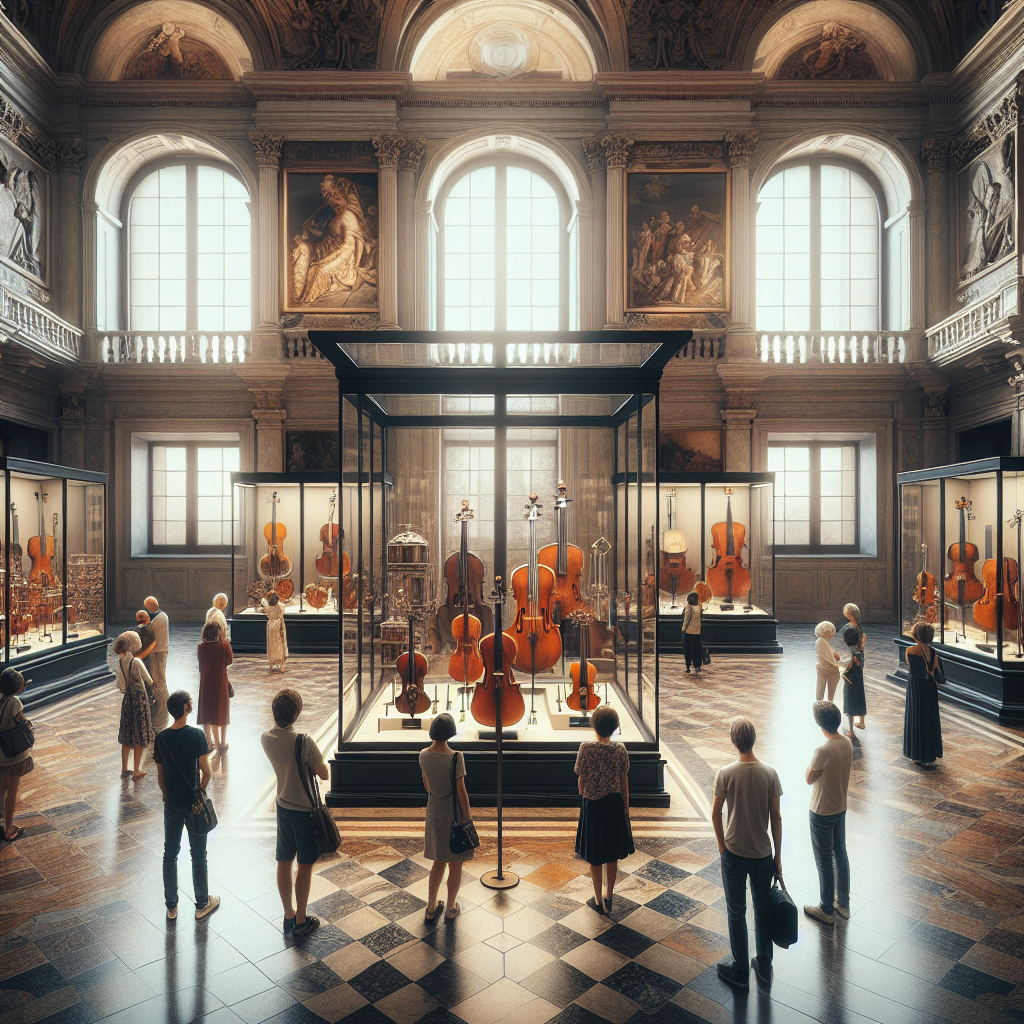
To celebrate the 270th anniversary of Count Ignazio Alessandro Cozio di Salabue’s birth, Palazzo Madama, the Civic Museum of Ancient Art in Turin, is hosting an exhibition devoted to this eminent 18th-century nobleman from Monferrato. Recognized as the foremost collector and scholar of stringed instruments in his era, Count Cozio played a pivotal role in acknowledging the artistic and historical value of classical Italian violin making, particularly the Cremonese tradition.
Turin Exhibition Honors Count Cozio, Pioneer of Classical Violin Scholarship – History
The exhibition, titled Count Cozio and the Myth of Stradivari. Masterpieces in Piedmont between the 1700s and 1800s, will run from September 19 to November 23, 2025. Organized in collaboration with Associazione Il Salabue and curated by Giovanni Accornero and Duane Rosengard, the show aims to familiarize visitors with Cozio’s remarkable yet relatively obscure legacy in Piedmontese cultural history. Born on March 14, 1755, in Casale Monferrato, Cozio distinguished himself not merely as a collector motivated by aesthetic appeal but as a scholar who applied rigorous historical and scientific methods to the study of string instruments, their provenance, construction, and the distinctions between various violin-making schools. His detailed notes presaged modern organology and elevated the understanding of violin craftsmanship.
The exhibition traces Cozio’s adventurous and modern approach through the display of twenty exceptional string instruments, twelve of which belonged to him and are publicly exhibited for the first time. These treasures, many loaned by private collectors and institutions rarely accessible to the public, include violins, violas, and other period instruments that contextualize the musical and cultural environment of the 18th and early 19th centuries.
Highlights include two violins associated with renowned Teatro Regio musicians: a 1718 Stradivari once owned by Giovanni Battista Viotti, accompanied by a rare portrait of Viotti painted by Élisabeth Vigée Le Brun, and a 1736 Guarneri “del Gesù” linked to Gaetano Pugnani. Both instruments are shown with their original cases, offering a rich historical narrative.
The central section features twelve instruments from Cozio’s personal collection, including six violins and two violas crafted by Giovanni Battista Guadagnini, the illustrious 1734 Stradivari “Ames”, Francesco Stradivari’s 1742 “Salabue”, a 1668 Amati inherited from his father Carlo Francesco, and the celebrated 1733 Bergonzi “Cozio-Tarisio”, favored among the five Bergonzi examples he possessed. Additional exhibits showcase violins by the Celoniato brothers, four pieces by Chiaffredo Cappa, a viola by Giacomo Rivolta, and three mandolins plus a guitar made by Guadagnini’s sons Giuseppe, Carlo, and Andrea.
Enhancing the exhibition is an interactive 3-D installation entitled The Shape of Sound, which invites visitors to explore in detail the “Salabue-Berta” violin made by Giovanni Battista Guadagnini in 1774. Utilizing Cozio’s own annotations, the installation elucidates the intricate construction techniques of historical violin making. Furthermore, the display includes period instruments and tools from the Fondo Stradivariano collection alongside original documents from the Carteggio Cozio archive, offering fresh insights into Cozio’s role as a collector and the musical milieu of his time.
Count Cozio’s collecting endeavours exemplify one of the earliest instances of integrating cultural, scientific, and conservationist principles within the realm of musical instrument preservation. His enthusiasm intertwined with active commercial engagement, supported by an extensive network encompassing musicians, merchants, and notable violin makers such as Giovanni Battista Guadagnini, a craftsman he notably patronized.
Evidence of his discerning vision is reflected in his ownership of the legendary 1716 Stradivari “Messiah,” now housed at the Ashmolean Museum in Oxford, esteemed as one of the best-preserved Cremonese instruments worldwide. Demonstrating remarkable foresight, in 1775, at the age of twenty, Cozio acquired from Paolo Stradivari—the son of Antonio Stradivari—the master’s entire workshop collection, including forms, cartoons, preparatory drawings, and tools. This invaluable heritage, currently preserved at the Violin Museum in Cremona, continues to serve as a critical resource for the study and preservation of Italy’s illustrious violin-making tradition, safeguarded through Count Cozio’s dedicated stewardship.
The exhibition is open daily from 10 a.m. to 1 a.m., except Tuesdays when it is closed.
— The Violin Post Editorial Staff