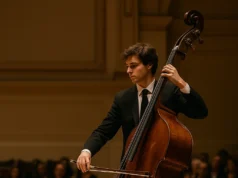

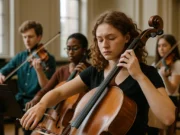
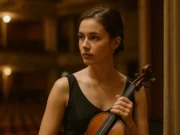
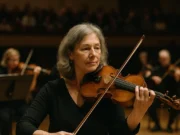
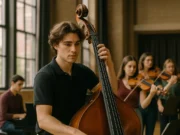
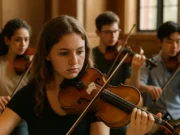
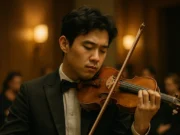
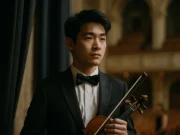
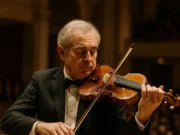
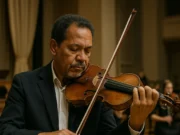
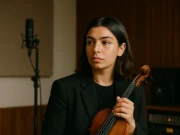
If you ever question the violin’s versatility, the Night of the Violin festival offers compelling proof. Tim Kliphuis, acclaimed violinist and the event’s curator, emphasizes, “It’s an important, wonderful instrument that can be used for truly exciting things.”
The festival, integrated within the Netherlands Violin Competition at TivoliVredenburg, stretches the conventional boundaries of the violin. Audiences can experience everything from jazz and folk to experimental music and improvisation. Typically linked with classical music, this edition curated by Kliphuis intentionally blends diverse cultures, genres, and generations. He states, “The violin is a magnificent instrument with many lesser-known possibilities. I hope the Night of the Violin helps to unveil these.”
The Vision Behind the Festival
“Traveling extensively, I’m well-acquainted with the international music scene and numerous guitar festivals worldwide,” Kliphuis explains. “While the Netherlands has long celebrated the Cello Biënnale, a violin festival like this is rare here and across Europe. This inaugural Night of the Violin addresses a surprising gap in showcasing the instrument’s range.”
Addressing the Violin’s Singular Perception
The violin’s prominence within classical orchestras is unquestionable, often enjoying higher status than instruments like the cello, which has strived for equal recognition. Yet, Kliphuis points out, “We’ve never fully demonstrated the violin’s versatility beyond classical music. We’re using this festival to prove its vast influence across continents and musical styles, united by the common thread of the violin.”
Popular Misconceptions About the Violin
“The notion that the violin is predominantly a classical instrument stems from limited exposure,” Kliphuis asserts. “In regions like Scotland, Ireland, and the United States, non-classical violinists thrive in Celtic music, bluegrass, and American fiddling traditions. Similarly, Venezuelan and Brazilian samba styles showcase the violin’s key role. These traditions are often overlooked, leading to a narrow view of the violin’s identity. This festival is designed to widen that perspective.”
Balancing a Diverse Program
When asked about the risk of an overly broad musical program, Kliphuis responds, “That diversity is precisely the point. However, careful curation is essential.” This year’s theme interlaces classical roots with pop, jazz with global sounds, and emerging talents alongside veteran artists. Highlights include Emine Bostanci on the kemenche—a traditional Turkish violin played upright on the lap, contrasting with the western violin’s 16th-century origins—and composer Peter Broderick, who merges his classical violin background with indie rock and Irish folk influences, premiered through a new composition for first-year Conservatorium van Amsterdam string students.
Don’t Miss Highlights
Klyphuis recommends Session A9 for an unforgettable experience: “This Scottish supergroup offers traditional Scottish tunes played on amplified acoustic violins, backed by an electrifying rhythm section. Performing in the Pandora hall, their sound feels like a rock concert driven by violins. It’s extraordinary and one of my personal favorites.”
He also emphasizes the festival’s grand finale—the Mash-Up jam session. “Last year, we had 24 violins, several guitars, basses, and piano, all performing together under my direction. It’s incredible evidence that musical styles can unite rather than divide us.”
Event details:
Date: January 30, 2026
Venue: TivoliVredenburg
nachtvandeviool.nl
— The Violin Post Editorial Staff