

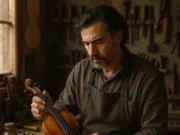
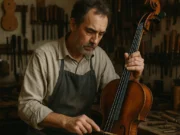
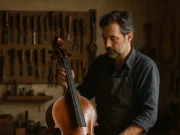

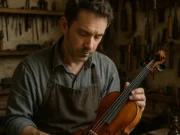
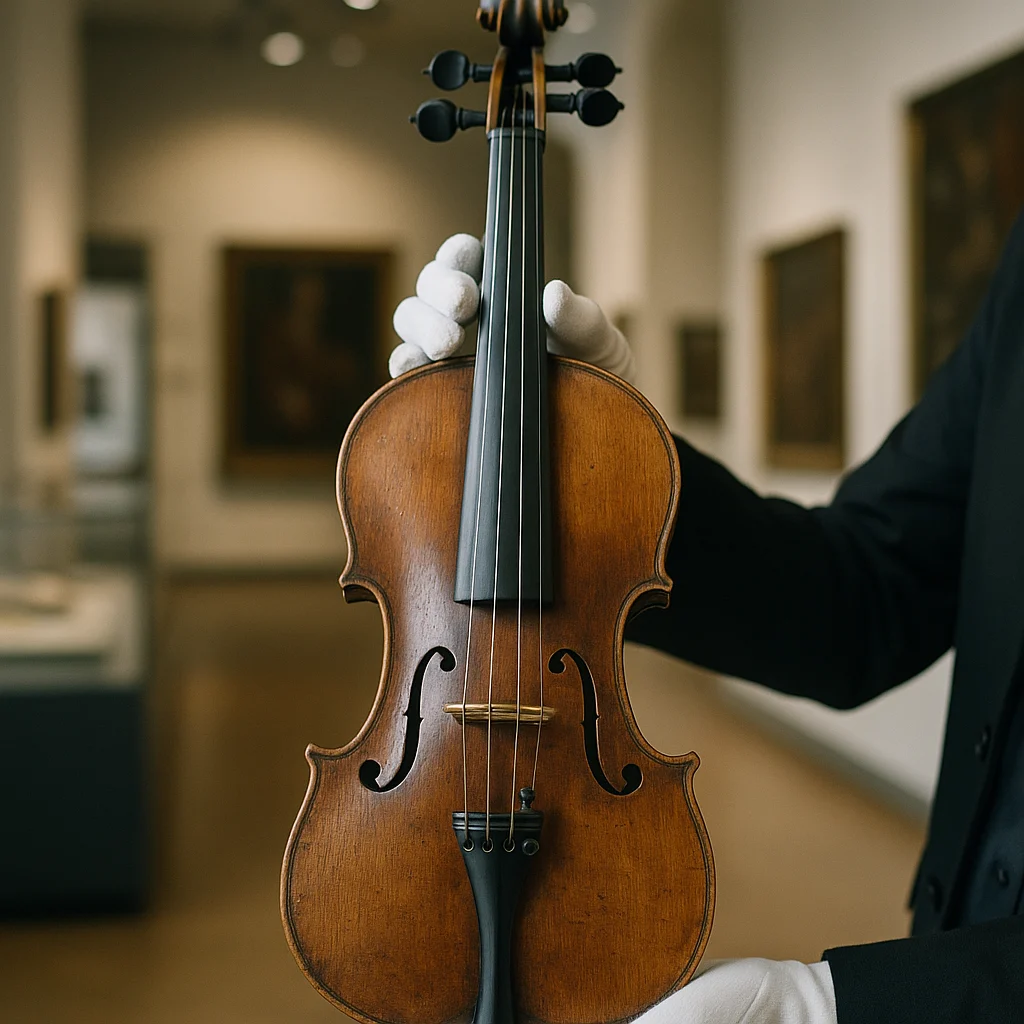
The Basel Historical Museum (HMB) has recently undertaken a thorough investigation into the provenance of a violin long believed to be a valuable artifact from the 18th century. This research aimed to clarify whether the instrument was genuinely crafted by renowned Italian luthier Nicolò Gagliano.
Switzerland’s complicated history with art objects, especially those linked to the Nazi era, has driven museums to carefully examine the origins of their collections. Debates over pieces taken from Jewish owners or purchased at suspiciously low prices have prompted intense scrutiny. Notable controversies, including those involving the Bührle Collection and the Gurlitt trove, have highlighted the importance of provenance research.
The HMB extended such efforts to its large assortment of musical instruments, which represents the country’s most extensive collection. Among these objects was the aforementioned violin, whose authenticity had been under question.
The Influence of a Controversial Dealer
The uncertainty surrounding the violin’s history largely stems from its association with Henry Werro, a Swiss violin maker and dealer infamous for his role in the “violin war” of the 1950s. Werro was convicted of fraud after it was discovered he removed original labels from older instruments and attached them to lesser violins, which he then sold as masterpieces. Werro passed away in 1971.
Application of Advanced Scientific Techniques
To determine the violin’s true origin, researchers employed sophisticated technology such as dendrochronology, which analyzes tree ring patterns in the wood, as well as computer tomography scans to inspect the instrument’s internal features without causing damage.
Curator Isabel Münzner emphasized the complexity of provenance research in musical instruments, stating, “Unlike paintings, these instruments are functional objects, subject to play, repair, and refinishing over time, which complicates tracing their origin.”
The investigations confirmed that the violin is an authentic product of Nicolò Gagliano’s workshop, dating back to approximately 1780. Moreover, the instrument was found to have no ties to any illicit or looted property.
Extended Research and Ethical Assurance
In addition to the Gagliano violin, the museum examined over 30 other string and percussion instruments with uncertain histories, many originating from the World War II era. None of these were shown to have been acquired unlawfully.
This comprehensive research not only clarifies the provenance of the disputed violin but also reinforces the Basel Historical Museum’s dedication to the ethical management and stewardship of cultural artefacts.
Article translated from German with support from DeepL and amva.
— The Violin Post Editorial Staff