
BBC’s The Repair Shop Restores WWII-Era Violin Played in Nazi Concentration Camp – Luthier & Making
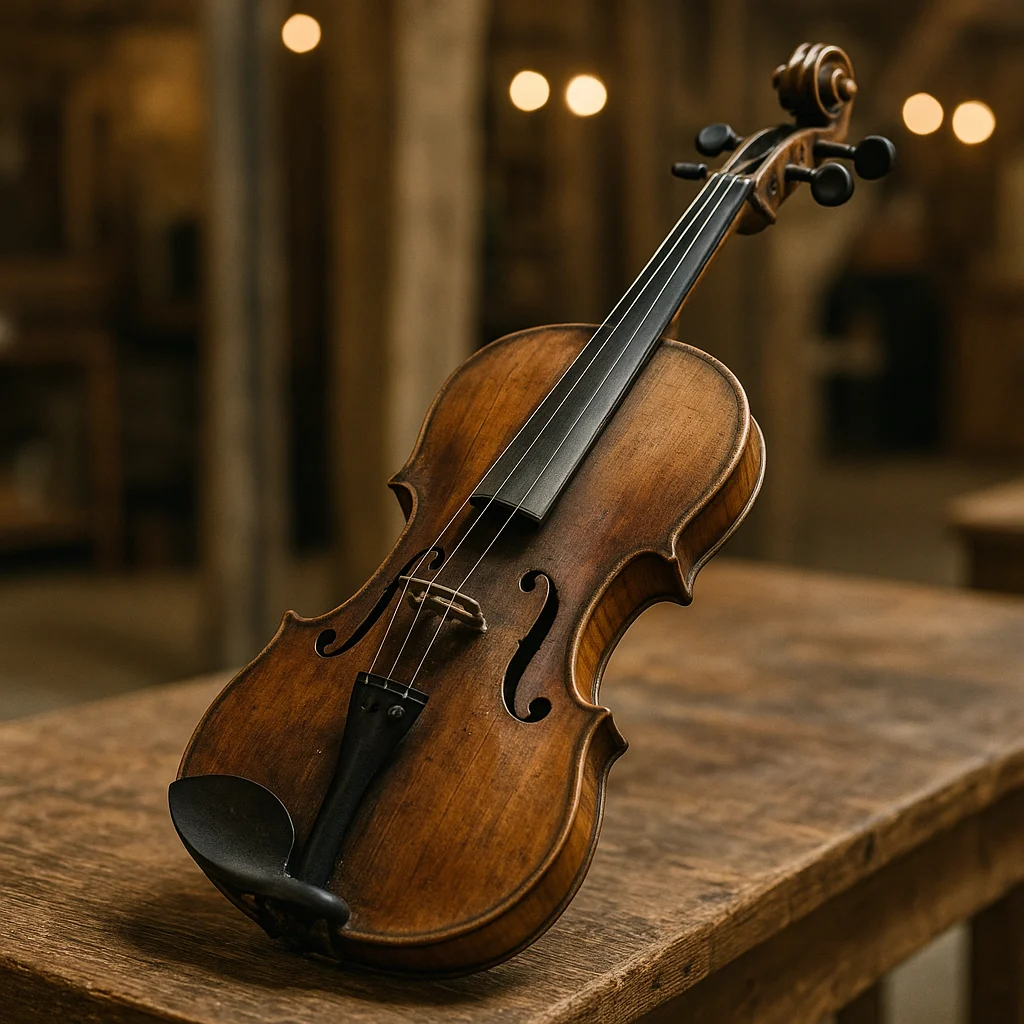
A violin that belonged to a Jewish musician compelled to play for propaganda purposes while imprisoned in a Nazi concentration camp underwent restoration on BBC’s The Repair Shop. This instrument carries a deeply moving history tied to World War II atrocities.
The musician, Siegmund Feitl, endured immense trauma under German captivity and ceased playing his violin after liberation, leaving the instrument damaged, dry, fractured, and with loose strings.
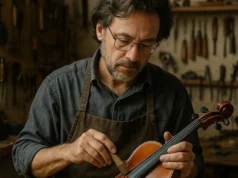
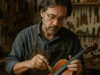
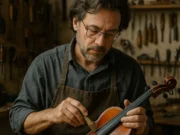
Becky Houghton, a violin expert featured on the show, described her emotional connection to the piece: “I don’t think I have ever held anything with such a poignant and sorrowful history. I hope to give it a happy future.”
Siegmund Feitl was born in Vienna in 1876 and was a celebrated performer in the city’s nightclubs before the Nazi occupation of Austria. Following the occupation, he was deported to the Theresienstadt camp in what is now the Czech Republic.
This camp detained approximately 140,000 Jews, including many artists and intellectuals. The Nazis exploited these prisoners to stage performances for Red Cross officials, attempting to disguise the brutal realities of camp life.
Despite this facade, around 33,000 inmates died from horrendous conditions, and about 90,000 were sent to their deaths elsewhere. Siegmund was ordered to organize an orchestra to perform during official visits to create a misleading impression of wellbeing.
The violin survived the camp and was brought back home by Siegmund, who passed away in 1963. It eventually came into the possession of his granddaughter, Margaret Gibson, who died ten years ago.
Margaret’s widower, Peter from Blackpool, sought to honor her memory by restoring the violin. He approached The Repair Shop seeking help from Becky Houghton, expressing a desire to make the violin playable again: “It was displayed above the fireplace and has dried out. I’d love to hear it played again; it was Margaret’s wish.”
Peter reflected on Siegmund’s suffering and the violin’s tragic history, becoming emotional as he recounted the harsh realities the musician endured. He noted how Siegmund was deeply affected, never playing the violin again due to trauma and arthritis.
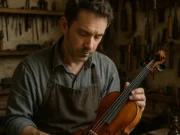
Becky Houghton admitted the restoration was a formidable task. She was particularly focused on preserving the original fingerboard, explaining: “This is where Siegmund’s hands touched, and I have to protect it at all costs.” She also found cracks in the wood, concerned about their potential impact on sound quality.
“This violin has endured a heartbreaking history,” Becky said. “I want it to have a joyful future now.”
The story of this violin is among several featured in the newly launched series The Repair Shop World War II, commemorating the 80th anniversary of the war’s end. The series highlights artifacts from the era, sharing the personal stories behind them.
Carpentry expert Will Kirk, introducing the series, remarked: “World War II represents a powerful family connection for many. The objects brought in carry colorful, tragic, or inspiring stories passed down through generations. Sometimes these items helped save lives, like a pocket watch stopping a bullet.” He emphasized the responsibility of The Repair Shop team in preserving these memories and honoring those who served.
The Repair Shop is available for viewing on BBC iPlayer.
— The Violin Post Editorial Staff