


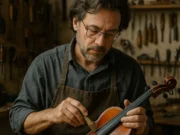
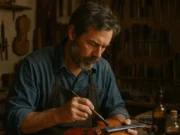


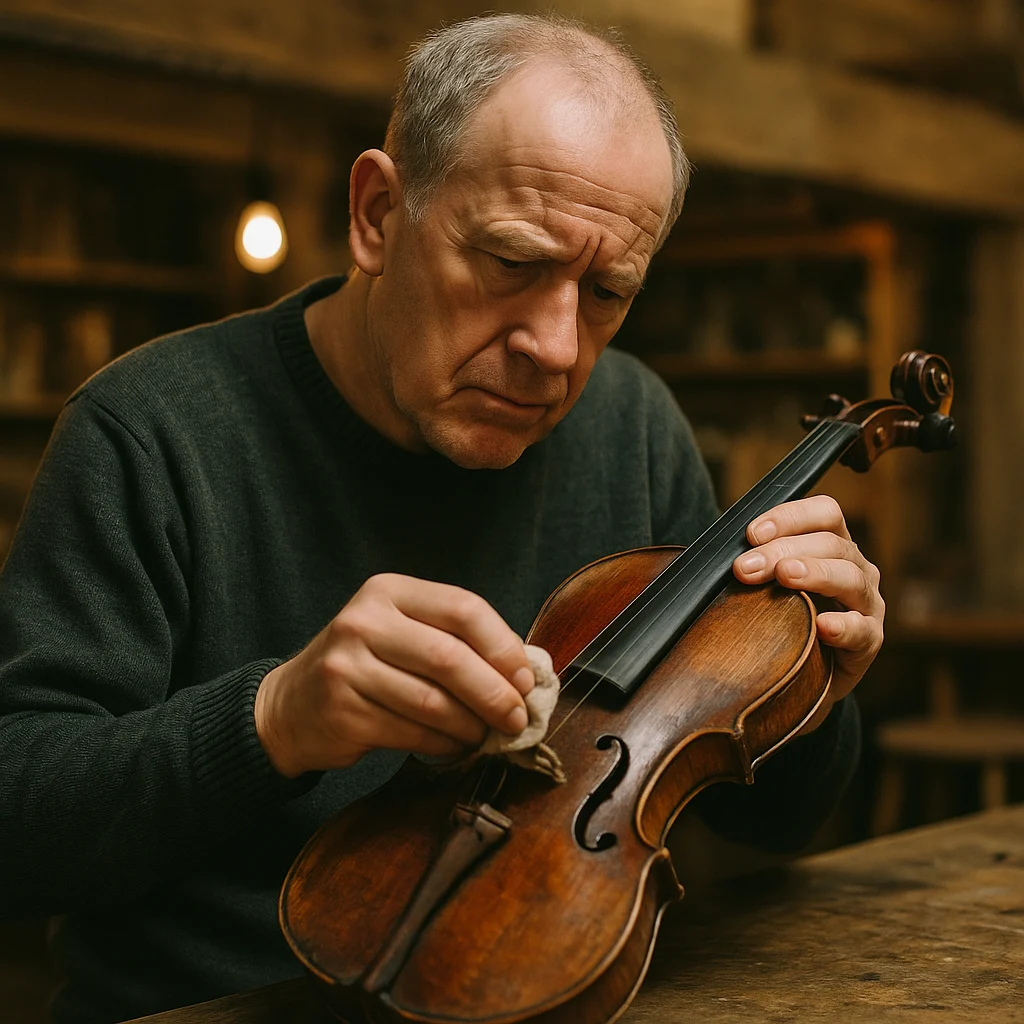
A man from Blackpool is on an emotional mission to restore a violin with a deeply moving history, as featured in a special episode of the popular British television show The Repair Shop. The violin once belonged to Siegmund Feitl, a Jewish musician who was forced to perform in a Nazi concentration camp during World War II.
Blackpool Man’s Emotional Journey to Restore Holocaust Survivor’s Violin on The Repair Shop – Luthier & Making
Siegmund, born in Vienna in 1876, was a talented performer who entertained audiences in city nightclubs before the rise of the Nazis. When Austria was invaded by Germany, he was deported to the Theresienstadt camp (present-day Czech Republic), which housed approximately 140,000 Jewish prisoners, including many artists and intellectuals.
Within the camp, the Nazis exploited Siegmund’s musical skills, ordering him to form an orchestra that performed concerts and events for visiting Red Cross officials. These performances were part of a deceitful propaganda effort designed to convey misleadingly positive images of life in the camp. Despite these efforts, a tragic reality persisted: around 90,000 prisoners were sent to death camps, and some 33,000 died due to the brutal conditions in Theresienstadt.
Siegmund survived and returned home with his violin but was so traumatized by his experiences that he never played the instrument again. He passed away in 1963, and the violin was eventually inherited by his granddaughter, Margaret Gibson, who died ten years ago. Her widower, Peter from Blackpool, has since sought to have the violin restored in her memory.
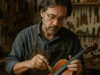
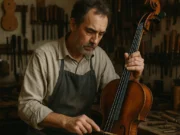
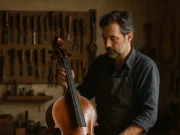
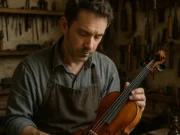
Peter brought the fragile and deteriorated instrument to The Repair Shop, hoping that violin restorer Becky Houghton could bring it back to life. The violin was found in poor condition—dried out, cracked, with loose strings—having been displayed above a fireplace, which contributed to its vulnerability.
Reflecting on the task, Becky expressed, “I don’t think I have ever held anything in my hands with such a poignant and sad history. I’d like it to have a really happy future.” She is especially determined to preserve the original fingerboard, where Siegmund’s hands once played, emphasizing the emotional significance of the restoration.
Peter recounted the harrowing history of the instrument and Siegmund’s suffering, describing how the musician had to organize the camp orchestra for staged visits by the Red Cross, despite the horrific conditions that led to thousands of deaths. Peter shared, “He never once played the violin again. It’s very sad. Margaret used to ask him to play, but he always declined, saying it was due to arthritis.”
The episode featuring this restoration is part of The Repair Shop World War II, a special edition marking the 80th anniversary of the conflict’s end. The series highlights personal stories and objects from the era, emphasizing remembrance and the legacy of bravery and sacrifice.
Woodwork expert Will Kirk, part of the show’s team, remarked, “World War II represents a strong link to many families, often accompanied by poignant and inspiring stories passed through generations. At The Repair Shop, we are privileged to hear these histories and assist in preserving mementos that honor those who endured and those who were lost.”
The emotional journey of restoring Siegmund Feitl’s violin not only revives a cherished family heirloom but also honors the resilience of a survivor whose music once gave hope amidst unimaginable adversity.
— The Violin Post Editorial Staff