
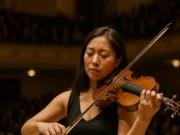
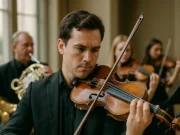

In 2024, a violinist primarily trained in modern string performance embraced the opportunity to record Wolfgang Amadeus Mozart’s violin and viola duets using period instruments. This endeavor marked a profound musical and technical challenge that ultimately enriched the artist’s understanding and appreciation of historically informed performance (HIP).
A Modern Violinist’s Journey into Historically Informed Performance of Mozart – Instruments
Though familiar with baroque orchestras and inspired by period ensembles like Quatuor Mosaques, the violinist had not previously identified as an early music specialist. The project demanded significant adjustment, both in instrument handling and interpretive approach, and consumed the bulk of 2024.
Motivated by Roger Norrington’s seminal 1980s Beethoven symphonies with the London Classical Players, where antique instruments fundamentally shape the music’s character, the artist sought to transcend modern performance conventions. Norrington has noted that period instruments provide unique insights into compositions, a perspective that fueled this undertaking with Mozart’s works.
Extensive listening and reading formed the foundation of this exploration. Influential recordings included Malcolm Bilson’s complete Beethoven piano sonatas, Steven Isserlis and Robert Levin’s Beethoven cello sonatas, and performances by Elizabeth Wallfisch—who emerged as a personal idol. Complementing these were seminal texts such as Charles Rosen’s The Classical Style and Dorian Bandy’s Mozart the Performer, which offered musicological insights reshaping the violinist’s perception and interpretation.
The practical transition to gut strings presented significant challenges. Initial efforts to integrate gut strings incrementally with a modern violin met with intonation difficulties and mechanical issues. Subsequent experimentation with a complementary set of gut and steel strings, including the historically renowned Gamut Tricolore Heifetz collection, was only partially successful. Ultimately, after trial and error with string gauges and types—including Toro ram and Aquila silver-covered strings—a satisfactory combination was established, though the process required patience and meticulous note-taking.
Simultaneously, the selection and testing of period bows further refined the sound. Three bows of French, German, and classical design were compared for tonal warmth, articulation, and responsiveness. The Stephen Marvin 18th-century German bow copy was favored for its rich and vibrant qualities, particularly suited to the German repertoire on the program.
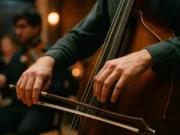
The artist confronted new technical demands inherent to gut-string playing. Unlike modern steel strings, gut strings require precise bow placement and a nuanced touch. The motion to initiate a note involves the bow hair just touching the string rather than starting from the string. Bowing technique needed adjustment to draw the bow deeply and steadily, akin to moving through creamy peanut butter, contrasting with the lighter, bouncing strokes common in modern playing. This approach necessitated developing new muscle memory and patience.
The left hand also adapted to the wider gut strings and altered playing posture without a chin rest. The wider string circumference compelled recalibrated finger placements and a gentler, more relaxed touch to avoid trapping fingers against the viscous strings. The artist found value in Ruggiero Ricci’s pedagogical works, which promote classical left-hand technique compatible with period performance practice.
Intonation posed the greatest hurdle. Adjusting to a lower historical pitch standard of A=430 Hz from a modern norm near 441 Hz unsettled the violinist’s previously reliable pitch sense. The complex overtones of gut strings further obscured pitch centers, requiring dedicated exercises in recognizing resonance and harmonic tuning rather than absolute pitches. Over time, and with consistent practice, the artist successfully expanded their auditory framework to include multiple tuning standards, enhancing versatility.
The recording project was additionally a collaborative endeavor with scholar and collaborator Dorian Bandy, blending differing but complementary expertise in Mozart interpretation. The result is a testament to how historically informed insights can revitalize familiar repertoire, illuminating music’s enduring human qualities.
While this journey represents but one path into the realm of HIP, it offers practical guidance and encouragement to modern players curious about period instruments. Embracing historical practice challenges preconceptions and cultivates fresh expression, affirming that 11th-century music lives anew through informed performance.
For those interested in further immersion, the violinist recommends immersing oneself in thoughtful recordings, studying relevant literature, experimenting patiently with gut strings and period bows, and adopting a flexible, investigative mindset.
Happy practicing!
— The Violin Post Editorial Staff