


























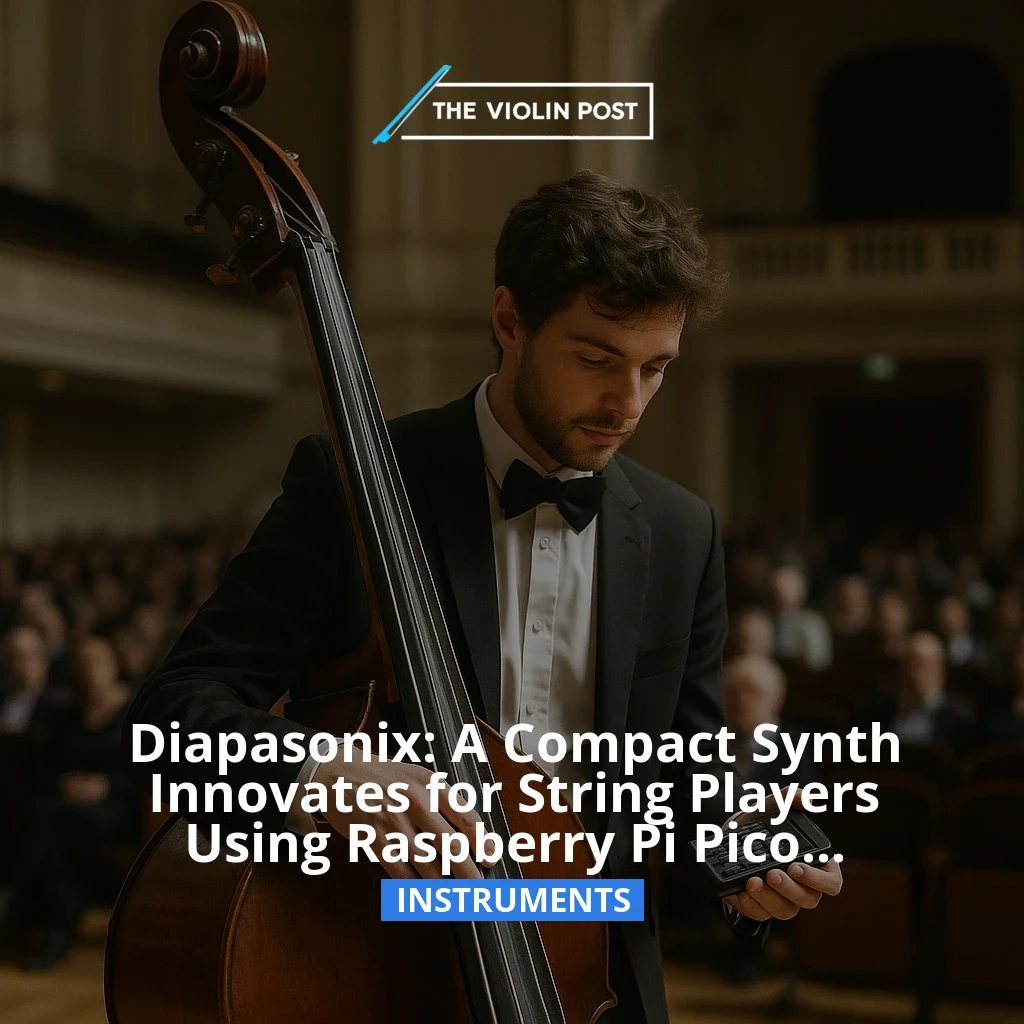
In a notable fusion of technology and string performance, Turi Scandurra has introduced Diapasonix, a handheld synthesizer powered by the Raspberry Pi Pico 2 microcontroller. This compact device is designed specifically for string players, expanding their expressive palette with synthesized sounds and effects integrated into a portable form factor.
Bridging Tradition and Technology
String instruments like the violin, viola, cello, and double bass have long embodied a rich acoustic tradition. Yet the integration of synthesis and digital processing continues to intrigue musicians seeking to push the boundaries of their instruments’ capabilities. Diapasonix responds to this interest by offering a device that is neither cumbersome studio equipment nor a fully digital instrument replacement, but instead a versatile handheld synth that can be operated alongside traditional playing techniques.
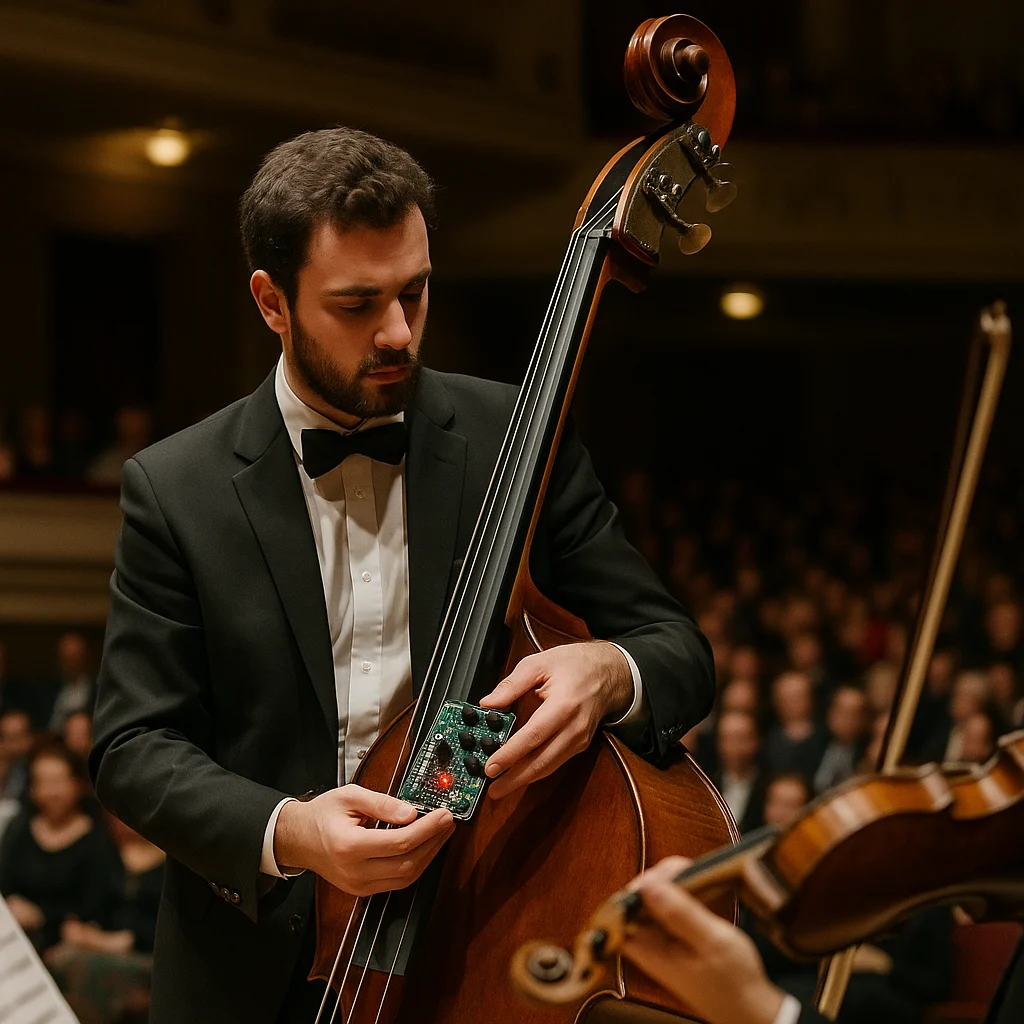
Powered by the Raspberry Pi Pico 2, a microcontroller known for its affordability and computational power, Diapasonix embodies a technically sophisticated approach to sound generation and manipulation within a compact design. This hardware foundation allows for nuanced control and programmability, enabling string players to explore timbres and effects not readily accessible through acoustic means alone.
Implications for Performers and Creative Exploration
For performers and students, Diapasonix presents an opportunity to experiment with timbre and texture during practice and performance, potentially inspiring new compositional ideas or improvisational approaches. The device could also serve as a practical tool within pedagogy, helping players develop aural skills and engage with electronic soundscapes in a hands-on manner.
Luthiers and instrument makers may observe Diapasonix’s evolution as part of a broader trend toward hybrid acoustic-electronic instruments, prompting dialogue about how traditional craftsmanship interfaces with emerging technologies. Meanwhile, orchestras and ensembles might consider the incorporation of such devices to expand their sonic palette, particularly in contemporary repertoire that blends acoustic and electronic elements.
Context within the Classical Music Ecosystem
While purely electronic instruments remain distinct from the violin family, devices like Diapasonix symbolize a growing intersection between classical music tradition and modern electronics. Increasingly, musicians and composers are embracing technology to augment or transform instrumental expression, reflecting changes in aesthetic priorities and audience expectations.
Moreover, the use of accessible, open hardware platforms such as the Raspberry Pi Pico 2 democratizes the development and customization of musical technology. This fosters innovation at various levels, from individual hobbyists and educators to professional developers and experimental performers.
Why this matters
- Diapasonix represents a novel application of microcontroller technology tailored for the nuanced demands of string performers.
- It impacts a range of stakeholders including instrumentalists, educators, composers, and luthiers interested in integrating electronics with acoustic instruments.
- The device exemplifies broader trends toward hybridization in classical music, bridging acoustic traditions and digital innovation.
- Its portability and accessibility encourage experimentation and could influence future performance practices and instrument design.
- Observing its adoption and development will provide insights into how technological tools reshape creative possibilities within the string instrument community.
Related topics
- The role of electronics in contemporary string performance
- Advances in microcontroller-based musical instruments and interfaces
- How hybrid acoustic-electronic instruments influence modern composition and improvisation
Editorial Commentary
Instrument-centered articles are valuable because they connect sound, materials, construction, and performance practice. For specialists and enthusiasts alike, they provide insight into the physical objects that stand at the heart of musical interpretation.
Read in a broader way, this type of story helps explain why the history and evolution of the $instrument_label still matter today to makers, performers, collectors, educators, and serious listeners.
About The Violin Post
The Violin Post is an international editorial platform dedicated to violin making, classical performance, competitions, instruments, and the wider culture of the string world.
Its coverage connects news reporting with specialist context for readers interested in performers, makers, educators, institutions, and musical heritage.
Related Articles
- Italian Double Bass Worth $150,000 Reported Stolen in New York
- Unusual Designs in Traditional Musical Instruments: A Closer Look at Innovation and Experimentation
- Exploring the Top Free Kontakt Instruments of 2025: New Opportunities for Violinists and Classical Musicians
— The Violin Post Editorial Staff