
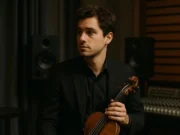
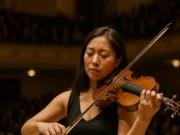



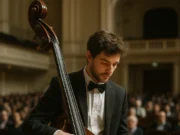

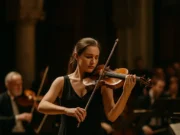
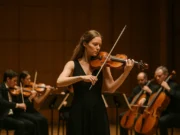
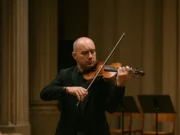
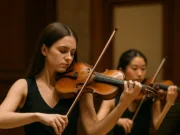
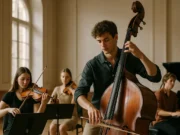
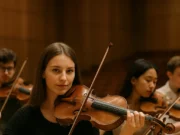
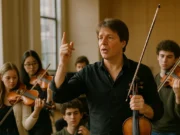
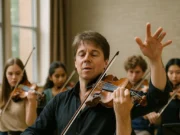
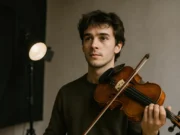
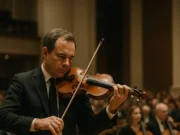

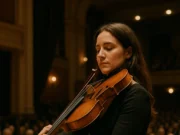

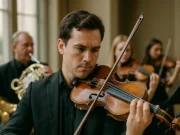
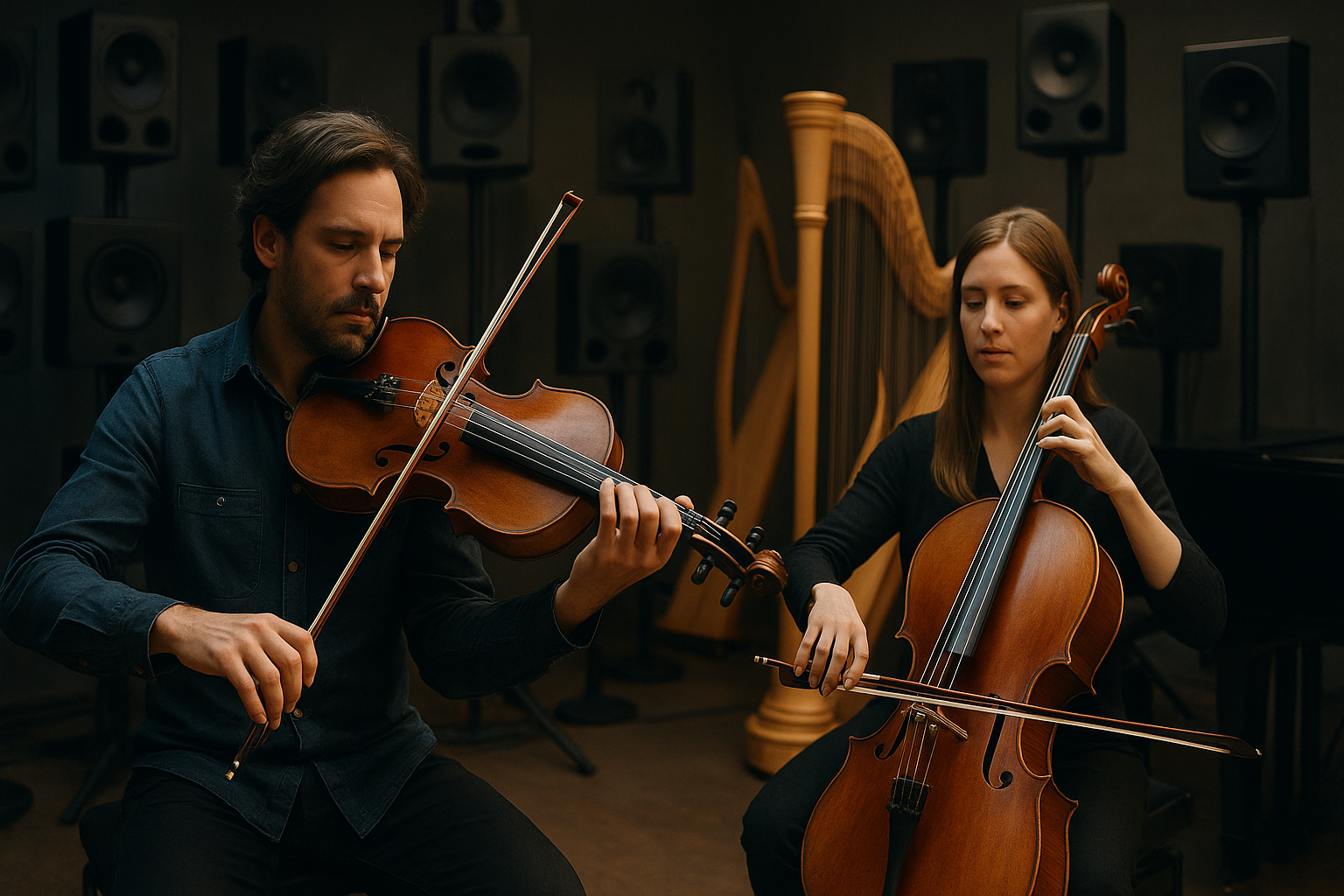
Echo Collective, founded by Neil Leiter and Margaret Hermant, continues to redefine the possibilities of string music with their latest release, Mirror Image, available on the Naïve label. The album encapsulates the ensemble’s innovative approach to music-making, blending traditional string instruments like viola, violin, harp, and piano with extended techniques and cutting-edge spatial audio technology.
Echo Collective Pushes Boundaries with Immersive String Soundscapes in ‘Mirror Image’ – Instruments
This approach transforms string instruments from mere melodic tools into creators of expansive soundscapes. By employing amplification techniques that highlight even the subtlest sounds—such as the whisper of bow hair on the strings or the delicate resonance of harmonics—the ensemble invites listeners into an intimate acoustic world where sound is experienced viscerally as well as aurally. The amplification reveals textures and nuances often imperceptible in conventional performance, dissolving the boundaries between performer, instrument, and audience.
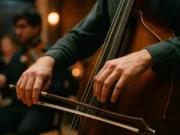
Leiter and Hermant share a collaborative compositional voice by applying a versatile set of extended techniques across violin and viola. These include a range of bow placements—sul ponticello for metallic overtones, sul tasto for ethereal sounds, and ordinario for warmth—alongside artificial harmonics, flautando, col legno tratto, and bow-string scrapes. This technical breadth allows the instruments to interchange roles fluidly, producing a dynamic dialogue with no fixed hierarchy.
The pair also experiment with non-vibrato tones, microtonal inflections, and detuned unison playing, expanding the harmonic palette beyond traditional tuning systems. Moreover, they manipulate bow pressure from featherlight to heavy, introducing controlled distortion that, when combined with effects such as reverb and delay, creates richly textured sonic landscapes. This methodology shines in tracks like “Dante,” where subtle shifts in pressure articulate a compelling interplay between clarity and distortion.
Complementing the strings, Hermant’s harp work transcends conventional plucking techniques. By using a violin bow on harp strings and integrating circular bowing and tremolo, she achieves sustained, evolving textures unattainable by fingers alone. Amplification and contact microphones further transform the harp into a percussive instrument, with taps and scrapes becoming integral rhythmic and textural elements. This expands the ensemble’s sound, bridging harmonic, rhythmic, and ambient roles.
A defining feature of Mirror Image is its integration with 4DSound technology, a spatial audio system that reimagines concert sound beyond traditional stereo or surround formats. Commissioned by the Richard Thomas Foundation and developed in Berlin’s Monom venue, the system positions sound sources within a four-dimensional space, allowing the ensemble to spatialize articulations and harmonics dynamically around the listening audience.
Working closely with sound engineer Fabien Leseure, Echo Collective recorded performances using multiple microphone perspectives—including close, room, and contact mics—to capture granular details and ambient resonance. These recordings become materials for spatial composition within the 4DSound Suite, enabling the creation of vivid “Sound Holograms” where a single bow stroke spatially evolves from attack to decay, traveling around and above listeners.
This spatialization supports imaginative explorations of sound movement and positioning, such as imagining harmonics moving overhead at varying velocities or enveloping the audience in a cloud of overtones. Beyond enhancing acoustic spaces, 4DSound actively participates in performance and composition, breaking down the conventional stage setup by surrounding listeners with speakers and performers alike, thereby fostering a unified sonic environment.
Echo Collective’s work represents a fusion of classical tradition with technological innovation, pushing string playing into new expressive territories. By integrating traditional acoustic instruments with spatial audio and extended techniques, they invite audiences into a physically and emotionally immersive musical experience, where instrument and environment merge seamlessly.
For further details and upcoming performances, visit www.echocollective.be.
— The Violin Post Editorial Staff