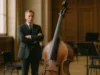

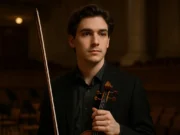
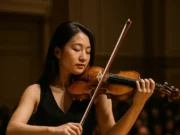
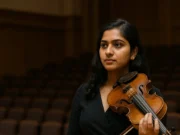
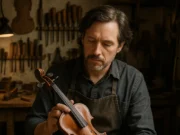
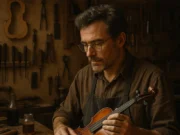
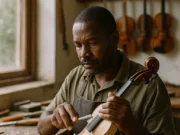
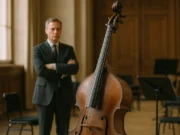
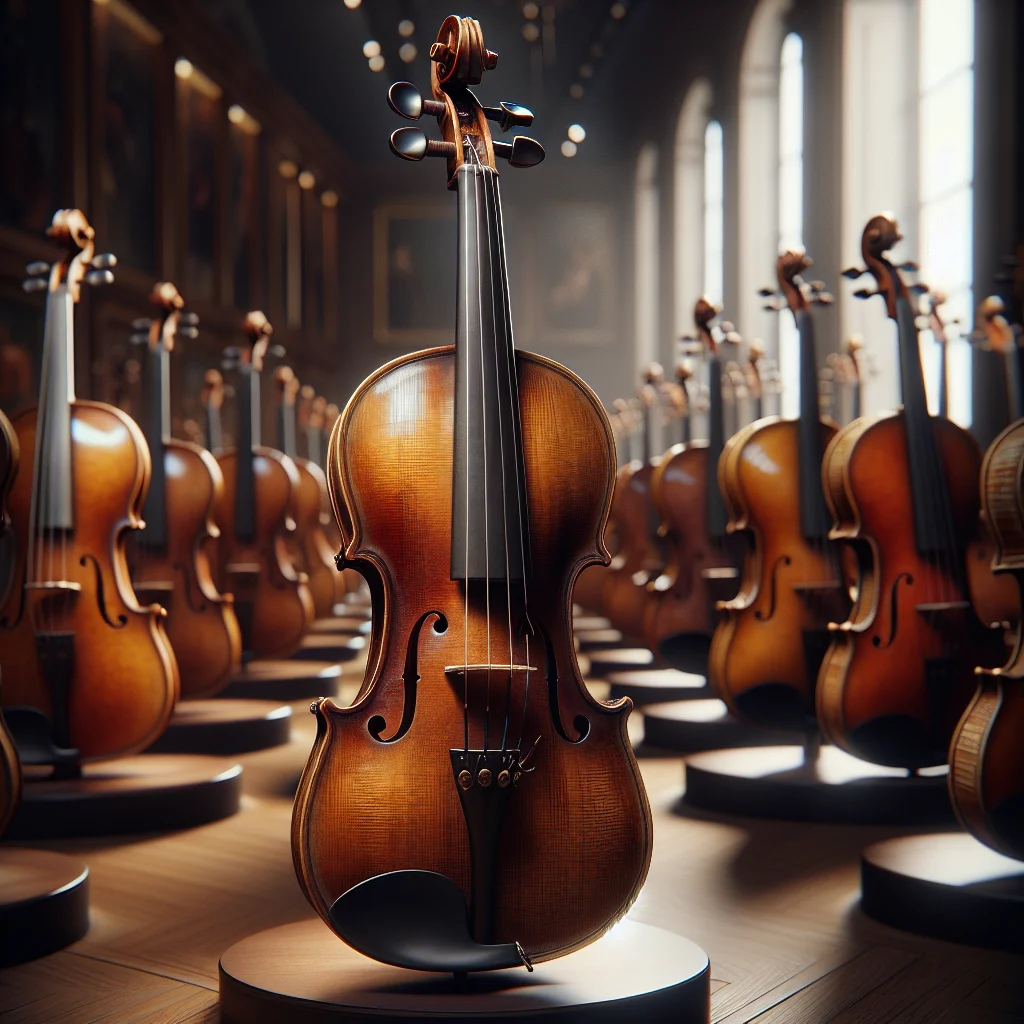
The Chimei Museum in Tainan, Taiwan, boasts a world-class collection of historic violins, featuring iconic instruments such as the 1709 Stradivarius once owned by Marie Hall, who premiered Ralph Vaughan Williams’s beloved composition, The Lark Ascending. Andrew Green takes us through the museum’s treasures accompanied by curator Dai-Ting Chung, and examines concerns over the collection’s future in light of escalating political instability in the region.
Since the inauguration of President Trump nearly 100 days ago, global political dynamics have seemed increasingly unpredictable, raising fears that established international orders could be destabilized. One pressing issue emerging from this uncertainty is the potential threat to Taiwan’s sovereignty, as China continues to display military readiness near the island and reportedly conducts rehearsals for possible beach landings. Taiwanese media reflects widespread apprehension that this could be a pivotal moment in the island’s history. The impact of ongoing trade tensions between the U.S. and China on any prospective invasion remains unclear.
Sharing Art Beyond Private Enjoyment
In the event of military conflict, the foremost concern must be for the safety of Taiwan’s people. However, cultural custodians also worry about safeguarding one of the finest violin collections in existence, housed in the Chimei Museum in Tainan, Taiwan’s former capital on the southwest coast. The collection’s survival from physical damage amid any conflict is critical, as is its continued accessibility to the global research and performance community should political control shift. Additionally, international responses such as boycotts might severely affect the collection’s use.
The Chimei Museum is internationally recognized for its unparalleled assemblage of historic violins. ©Adobe Stock
Designed explicitly to showcase a broad array of cultural artifacts, the museum stands as a testament to its founder, the late Wen-Long Shi. Shi, a successful entrepreneur in polymer resin manufacturing and an enthusiastic amateur violinist, amassed the collection. He firmly believed that “works of art are not to be kept just for oneself to enjoy, but to be shared with the public.” This philosophy has allowed millions to appreciate the collection over the years.
Custodianship of a Universal Heritage
The museum’s collection comprises more than 1,750 string instruments crafted by over 1,100 distinguished makers, including legendary luthiers such as Antonio Stradivari, Guarneri del Gesù, Amati, Rogeri, Gagliano, and Guadagnini. Among the treasures is the 1709 Stradivarius once owned by virtuoso Giovanni Battista Viotti. This very violin was the instrument on which British violinist Marie Hall gave the first two performances of Vaughan Williams’s The Lark Ascending in 1920–21, first in a violin-piano arrangement and then with orchestra. Hall had first impressed Vaughan Williams years earlier while playing unaccompanied Bach on this same instrument during a 1914 meeting in Italy, inspiring the composer’s Romance for Violin and Orchestra. Hall maintained use of the Viotti-Stradivarius throughout her career, spanning over five decades until her death in 1956.
The Viotti-Hall Stradivarius featured prominently in the debut performances of Vaughan Williams’s The Lark Ascending. (Image courtesy of the Chimei Museum)
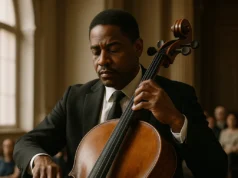
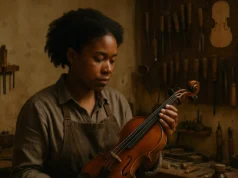
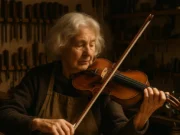
Dai-Ting Chung, the museum’s curator who trained as a violin maker in the United States, passionately explains the collection’s uniqueness. “Encountering such a vast array of historic instruments, crafted by over a thousand renowned luthiers in one location, is extraordinarily rare. Chimei affords musicians the opportunity to play many of these instruments, including those considered ‘dream’ violins,” he states.
Attracting Experts and Artists Worldwide
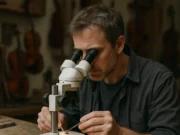
The museum continues to draw researchers, violin makers seeking inspiration, and performing musicians from across the globe, including groups from the Beijing Central Conservatory of Music. “Since 2014, over 200 violin makers have visited Chimei,” Chung notes, “and between 20 and 30 professional performers come annually to experience the collection firsthand.”
Dai-Ting Chung emphasizes the museum’s role as a custodian of priceless violin-making heritage. (Image courtesy of the Chimei Museum)
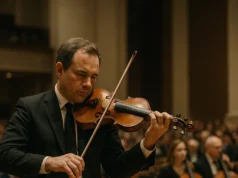
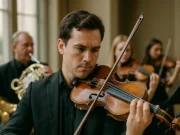
Over two decades, the Chimei’s violins have been loaned to both students and professionals on more than 4,500 occasions. Esteemed violinists such as Henning Kraggerud, Gérard Poulet, and Richard Lin have performed on instruments from the collection, as have other musicians like Yo-Yo Ma and the Amati Quartet with Chimei’s other stringed treasures.
Beyond active use, these instruments are accessible daily to museum visitors worldwide—both in person and online—providing a tangible history of string instrument artistry.
(Image courtesy of the Chimei Museum)
The Viotti-Hall Stradivarius, created during Stradivari’s golden period in 1709, changed hands several times since Marie Hall’s acquisition shortly after her 1903 London debut. In 1958, businessman Jack Morrison bought it for a then-record £22,000, expressing a desire to play it privately. Later, in 1988, it set another world record at £473,000 when purchased by a Brazilian amateur who occasionally loaned the violin to professionals, including British violinist Thomas Bowes, who described the instrument’s tone as “clear-cut with amazing projection.” Finally, Wen-Long Shi acquired the violin in 1991.
(Image courtesy of the Chimei Museum)
The current Chimei Museum building opened in 2014 and is equipped with advanced protection against fire, theft, and earthquakes. However, geopolitical shifts such as a possible Chinese takeover of Taiwan present new concerns. The Viotti-Hall Stradivarius, due to its historical connections, symbolizes potential risks to the museum’s collection. When asked about these concerns, curator Chung responded with measured resolve: “These instruments are the shared heritage of humanity. We are not their true proprietors, but rather their custodians.”
To preserve the violin’s musical legacy, the Chimei Museum has authorized the only existing recording of The Lark Ascending performed on the Hall-Viotti Stradivarius. The recording, featuring violinist Yijin Li with the Evergreen Symphony Orchestra, is available online for enthusiasts to appreciate and safeguard against uncertain futures.
Source: classical-music.uk
— The Violin Post Editorial Staff