




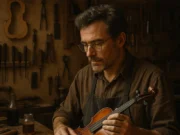












In the mid-1990s, Malcolm Rowe shifted his career path from furniture making to constructing guitars, driven by the ambition of becoming a rock star despite lacking the skills to play the instrument at that time.
“I thought if I made one perhaps that would give me the impetus to learn to play and become a rock star,” he reflected. “But that hasn’t happened, yet.”
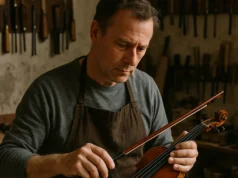
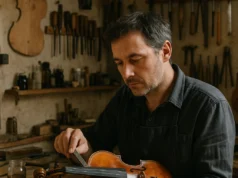
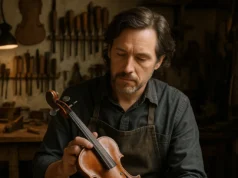
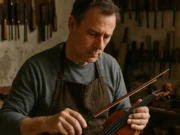
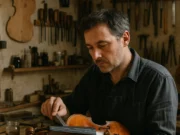
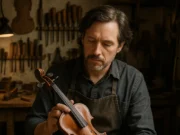
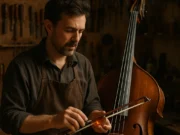
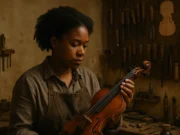
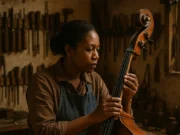
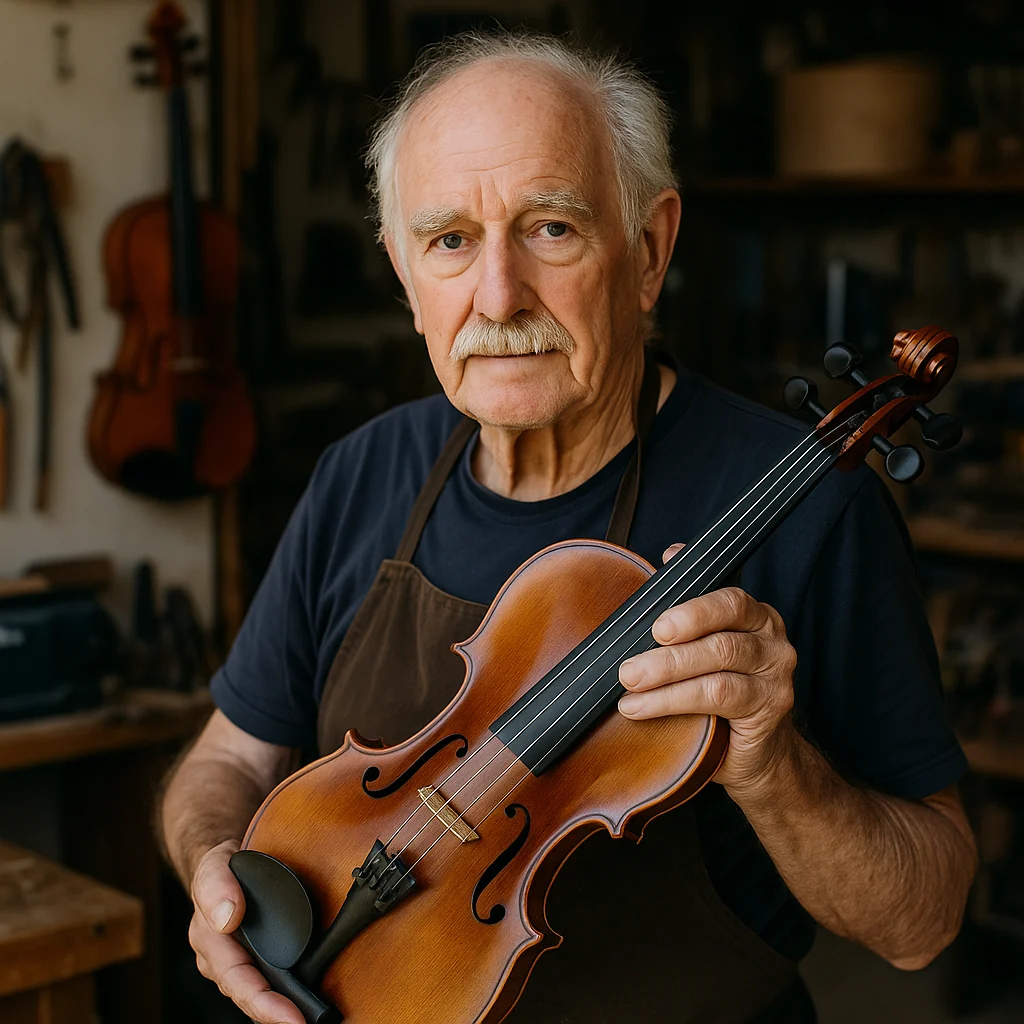
Over time, however, Rowe evolved into a violin maker, a profession he embraced wholeheartedly for over 15 years. Now 72 and residing in Loxton, in South Australia’s Riverland, he has no regrets about his vocational transformation.
“I just love working with wood and the challenge of making the different jigs and moulds,” Rowe said. “It’s a passion I’ve always had; as a young man, I spent all my money on balsa wood and crafting various models.”
Alongside crafting string instruments, he eventually learned to play both the guitar and the violin but chose to focus on his role as a luthier rather than pursuing rock stardom.
More recently, Rowe has expanded his craft to building drum kits within his workshop. Inspired by a friend from Sydney who introduced him to a technique involving steam bending solid wood into drum shells, Rowe applied similar methods to those he previously used for making kegs.
“I thought I might see if I could make a decent snare drum, and so I did, just using the same method as I used to make kegs,” he explained. “After many mistakes and trips to the dump with the mistakes, I’ve completed two drum kits.”
One of these drum kits found its way to Greg Clifford, the sound engineer for the renowned Australian rock band The Angels, who has generously shared his expertise with Rowe.
Demanding Craftsmanship
Violinist and vice president of the Music Teacher Association of South Australia, Wendy Heiligenberg, highlighted the considerable effort required to create musical instruments like the violin.
“It takes about 200 hours to make a violin, and that’s before you varnish it,” she said. “Considering how many hours of work that entails, earning a living from this craft is quite challenging.
“Often, makers focus on repairs rather than producing new instruments. It’s exceptional to find a luthier actively creating new violins instead of just repairing them.”
Violin maker Rainer Beilharz, with over four decades of experience, noted that although there used to be hundreds of small-scale violin makers and repairers in Australia, only a handful operate on a larger scale today.
Despite their reduced numbers, Beilharz emphasized that it is an exciting era for violin making due to advancements in acoustics and research.
“Our understanding of these historic instruments and methods to create excellent sounding violins has advanced substantially,” he said. “There are now many acoustic tools available to luthiers.”
A Lifelong Passion
Back in Loxton, Malcolm Rowe remains devoted to his craft and sees no intention of retirement on the horizon.
“Retirement is a swear word in our house,” he remarked. “I’ll continue making instruments as long as I can. I love it.”
— The Violin Post Editorial Staff