


































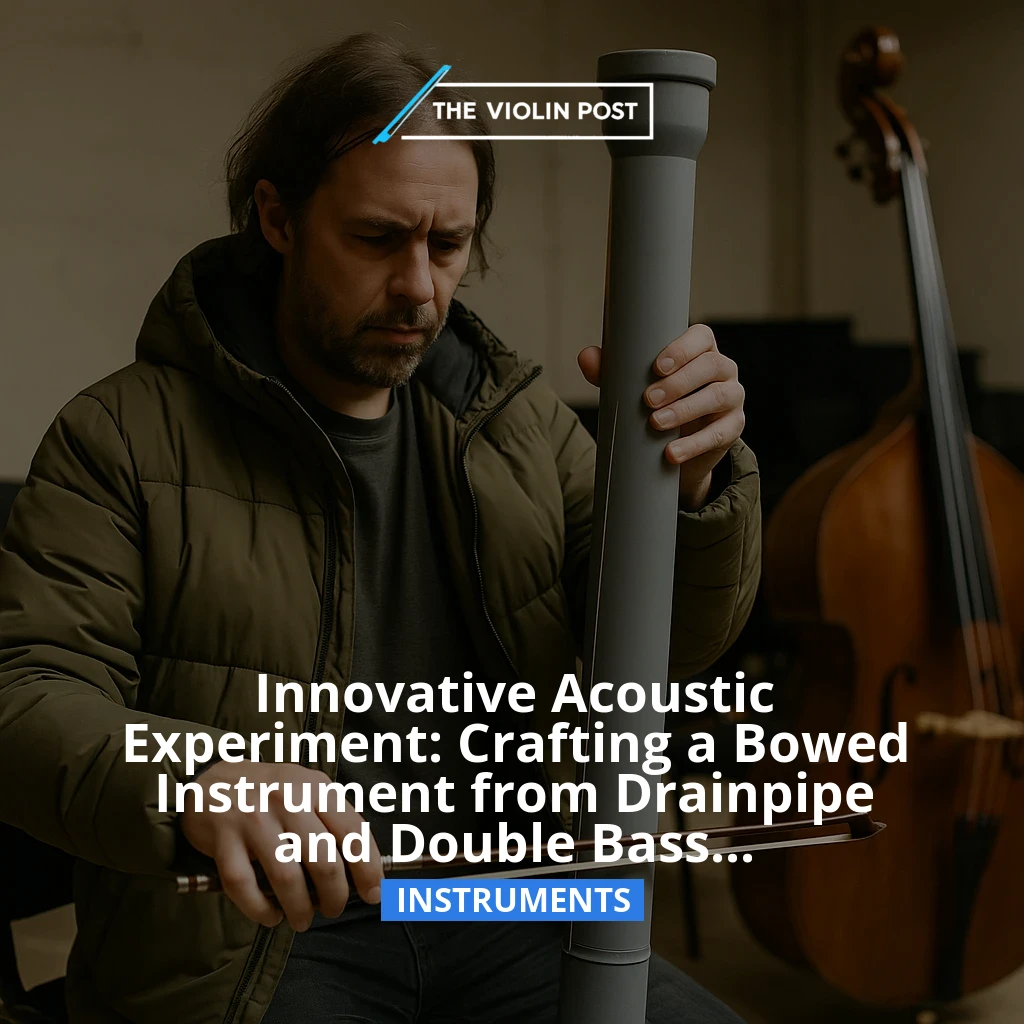
A recent experiment in acoustic instrument construction has caught the attention of both luthiers and contemporary musicians. The project involves crafting a bowed string instrument using a section of drainpipe as its body, paired with a single double bass string as its vibrating element.
Traditionally, bowed instruments such as violins, violas, cellos, and double basses rely on carefully shaped wooden bodies and precisely tensioned strings to produce their characteristic tones. In this project, the drainpipe serves as a resonant chamber, substituting standard wooden construction with a materially unconventional choice. The string employed is that of a double bass, known for its substantial gauge and rich, low frequencies.
The creator’s approach is situated within a broader lineage of experimentations in lutherie and sound art, where non-traditional materials and forms challenge canonical instrument design. The use of a drainpipe—typically a utilitarian, industrial component—raises questions about the nature of acoustics, resonance, and the interface between the instrument’s structure and its sonic output.
This innovative instrument, while unique, invites curiosity regarding the tonal qualities achieved, playability, and potential applications in various musical contexts. It also showcases how resourcefulness and imagination can redefine the tools of musical expression, opening avenues for new timbres and exploratory performance techniques.
Musicians interested in extended techniques and contemporary compositions may find such instruments valuable, particularly within experimental ensembles or electroacoustic collaborations. Moreover, such projects highlight the close relationship between material science and musical innovation, encouraging further exploration beyond traditional materials.
Why this matters
- Explores the boundaries of instrument construction with non-traditional materials, prompting reconsideration of what constitutes a viable acoustic instrument.
- Impacts musicians and luthiers by inspiring new approaches to sound production and instrument design.
- Stimulates innovation within experimental and contemporary classical music scenes by providing novel timbral possibilities.
- Encourages sustainability and creativity by utilizing repurposed materials in musical craftsmanship.
- Signals potential future developments in acoustics and instrument making that may influence pedagogy and performance practices.
— The Violin Post Editorial Staff