


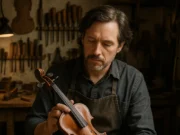
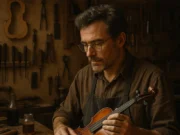

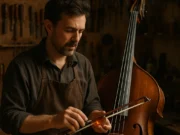








Researchers in Italy have produced a compelling new study that examines the intricate craftsmanship of Antonio Stradivari, offering fresh clues about the techniques that contribute to the phenomenal sound quality of his violins.
Stradivarius instruments, crafted by Stradivari and other Cremonese makers during the 17th and 18th centuries, continue to be highly esteemed, often outperforming modern violins in value and sound. This has led musicians, scientists, and historians to tirelessly investigate the factors that set these early instruments apart.
The key question remains: what exactly imparts such extraordinary tonal qualities to these violins?
Italian scientists have advanced this inquiry with a research article published by the American Chemical Society. Their study focuses on the chemical composition and layered structure of two historic Stradivari violins, probing beneath the surface to analyze the materials used in their finishes.
According to the research team, the way ground coats and varnishes are applied significantly influences the violins’ vibrational and acoustic properties, thereby shaping their distinctive sound.
The study was enabled by access to microscopic samples from two landmark Stradivari violins: the Toscano 1690 from the Accademia of Santa Cecilia in Rome, and the San Lorenzo 1718 housed at the Munetsugu Foundation in Tokyo, conserved by M° Sota Nakazawa of Nippon Violins.
Traditional optical imaging methods proved insufficient to fully visualize the preserved layers due to subtle fracturing over time. Prior investigations had identified protein traces such as collagen from animal glues, but more definitive chemical signatures were needed.
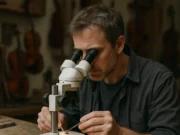
Using a sophisticated technique known as infrared scattering-type scanning near-field optical microscopy (infrared s-SNOM punctual analysis), the team detected an ultra-thin proteinaceous intermediate layer situated between the spruce wood substrate and the exterior varnish.
- They identified a stratigraphy of three distinct layers: the natural wood, a preparation layer containing proteins, and the varnish topcoat.
- The coating process was complex, involving multiple extremely thin layers measuring just a few micrometers each.
- Components from these layers appeared to intermingle, suggesting a nuanced compositional gradient rather than sharply defined boundaries.
Interestingly, variations emerged between the two analyzed violins. The protein layer in the Toscano 1690 either was thinner or penetrated deeper into the wood compared to that on the San Lorenzo 1718, indicating that Stradivari may have adapted his finishing methods over time or tailored them to each instrument.
Above all, the chemical layering discovered underscores Stradivari’s meticulous and deliberate approach, highlighting the precision craftsmanship behind his instruments.
The researchers assert that infrared nanoscale imaging represents a promising future avenue for unraveling enduring mysteries related to Stradivari’s materials and techniques, which have fascinated makers and scholars for over 200 years.
Stay Informed
For more classical music news and insights, consider signing up for the Ludwig van Daily newsletter, which delivers concise arts updates directly to your inbox.
Article authored by Anya Wassenberg, Toronto City Editor at Ludwig Van. With decades of experience in cultural writing and creative instruction, Wassenberg contributes in-depth perspectives on the arts.
Source: ludwig-van.com
— The Violin Post Editorial Staff