

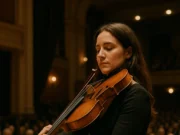
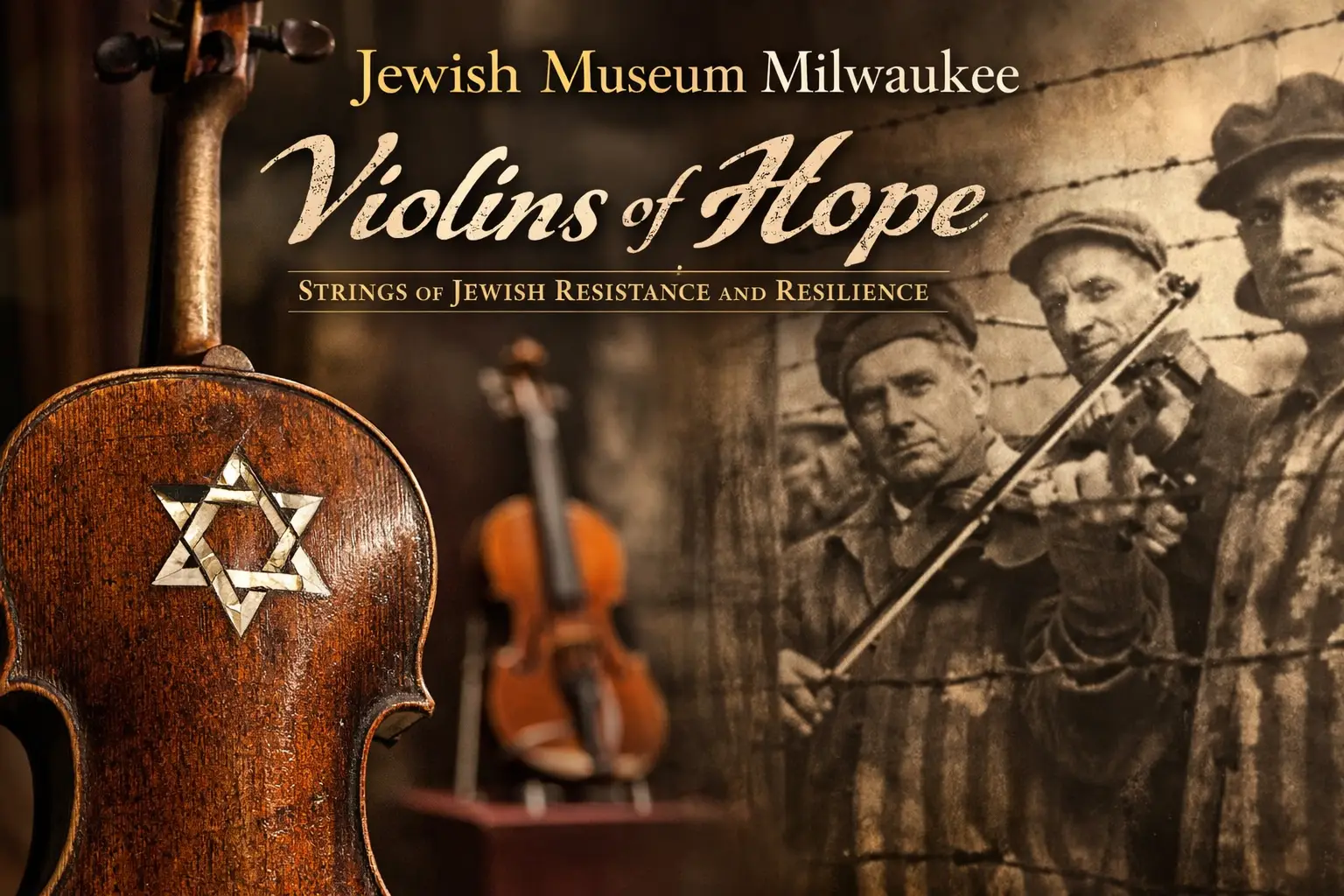
MILWAUKEE — Jewish Museum Milwaukee is opening a major exhibition dedicated to Violins of Hope, the internationally recognised collection of historic string instruments connected to the Holocaust and to Jewish resilience, offering the only extended Jewish-curated perspective within a large, citywide cultural initiative in southeast Wisconsin.
Titled Violins of Hope: Strings of Jewish Resistance and Resilience, the exhibition will run from 5 November to 25 January, with a special preview event scheduled for 4 November. The museum will display 24 restored violins, each bearing direct or indirect connections to Jewish musicians affected by Nazi persecution.
The exhibition forms part of a five-month citywide residency involving more than 60 organisations, led by the Milwaukee Youth Symphony Orchestra. The initiative brings concerts, educational programmes, performances, and exhibitions across the region, all centred on the historic instruments.
A uniquely Jewish interpretative lens
While dozens of organisations are participating in the residency, Jewish Museum Milwaukee will be the only Jewish institution presenting the violins in an extended exhibition format. According to curators, this distinction allows the museum to interpret the instruments through the lens of Jewish identity, memory, and lived experience.
“Jewish Museum Milwaukee will be the only Jewish space having an extended exhibition,” said Samantha Abramson, executive director of the Nathan and Esther Pelz Holocaust Education Resource Center (HERC), which is co-curating the exhibition. “We’re going to interpret the violins in a way that no other location will — through the lens of the Jewish community and our identity, with the instruments as vessels sharing hundreds of years of stories.”
The exhibition is a collaboration between Jewish Museum Milwaukee and HERC, both programmes of the Milwaukee Jewish Federation.
Instruments shaped by history
Each violin in the exhibition is connected in some way to the Holocaust — though the degree of historical documentation varies. Some instruments are accompanied by detailed provenance, while others bear only fragmentary traces of their past.
“These violins are all connected to the Holocaust in some way,” Abramson explained. “In some cases, we know the stories of those specific instruments, and in some cases, we don’t.”
Among the documented histories is that of Erich Weininger, a butcher and amateur violinist from Vienna. When Nazi forces marched into Austria in 1938, Weininger was arrested and deported to Dachau, where he managed to bring his violin with him — an extraordinary act given the conditions and restrictions of the camp.
Several instruments are visually marked by their owners’ identities. Some violins are decorated with mother-of-pearl Jewish stars or stickers, subtle yet powerful reminders of the personal histories embedded in their wood and varnish.
From Holocaust survival to global project
The Violins of Hope collection is owned by Israeli luthiers Amnon Weinstein and his son Avshalom Weinstein, who began collecting and restoring Holocaust-era instruments in the decades following the war. Since 2015, the violins have travelled internationally, forming the basis of exhibitions, performances, and educational initiatives across Europe and North America.
Milwaukee’s residency is notable for another reason: it marks the first time a non-Jewish organisation — the Milwaukee Youth Symphony Orchestra — has led the effort to bring the collection to a community.
Education at the core
Education plays a central role in the Jewish Museum Milwaukee exhibition. The programme is designed to engage K–12 students, particularly those in fifth grade and above, with interactive elements that encourage close observation and reflection.
While visitors will not be permitted to touch instruments from the collection itself, the exhibition includes a separate violin for hands-on exploration, allowing students to understand the physical nature of the instrument. Displays are arranged to offer multiple viewing angles, emphasising craftsmanship as well as wear left by decades of use.
HERC is also developing lesson plans and classroom resources to support school visits, with the goal of deepening understanding of Jewish history, antisemitism, and the human impact of the Holocaust.
“These are stories of individuals, and a violin is a deeply personal thing,” Abramson said. “We want visitors to think about the resilience of the Jewish people, and also to understand that we are all connected globally.”
Beyond the museum walls
The exhibition is only one component of a broader programme of events across Milwaukee. In addition to museum visits, the citywide residency includes concerts, educational residencies, and performances such as Fiddler on the Roof, many organised in partnership with local Jewish organisations.
By combining music, history, and education, the Violins of Hope initiative seeks not only to preserve memory, but also to confront contemporary antisemitism through storytelling grounded in individual lives.
At Jewish Museum Milwaukee, those stories are told not as abstract history, but as lived experience — carried, quite literally, in the bodies of the instruments themselves.
— The Violin Post Editorial Staff