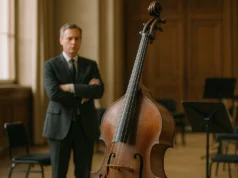




































The double bass has long occupied a unique position within the orchestral and chamber music setting. Often viewed as the leviathan of the string family, its size and weight have presented both physical and conceptual challenges to players and composers alike. However, recent reflections on this instrument reveal a surprising and almost paradoxical lightness that reshapes its role and perception in classical music.
Historically, the double bass’s imposing stature—standing nearly six feet tall and weighing upward of 20 kilograms—has demanded considerable physical endurance from performers. This aspect has influenced the way musicians approach technique and repertoire, with many assuming that the instrument’s bulk necessarily correlates to unwieldiness. Yet, contemporary insights suggest that the double bass possesses an unexpected nimbleness, both in its sound production and its expressive capabilities.
Advancements in lutherie, along with evolving performance practices, have contributed to enhancing the playability of the double bass. Modern bass makers experiment with lighter woods and refined construction methods to reduce weight without compromising acoustic quality. Simultaneously, players are discovering new ergonomic approaches that harness the instrument’s unique physical energy rather than fight against it.
This renewed perspective allows the double bass to transcend its traditional function as merely a foundation of the harmonic texture. Instead, it gains prominence as a versatile voice capable of lyrical melody and intricate articulation. Such versatility fosters greater inclusion of the double bass in solo and chamber settings beyond its usual orchestral context, broadening the instrument’s artistic scope.
Understanding the double bass’s “unbearable lightness”—a phrase that underscores the paradox of its substantial presence paired with surprising subtlety—invites a reconsideration of the instrument’s identity. It challenges musicians, composers, and educators to embrace its full expressive potential and to revise teaching methods to align with this evolving philosophy.
Why this matters
- Reevaluating the double bass’s physical and musical characteristics influences performers’ technique and pedagogy.
- This shift impacts luthiers by encouraging innovation in instrument design focused on playable weight and acoustics.
- It expands repertoire possibilities for double bassists, enhancing the instrument’s visibility in solo and chamber music.
- Orchestras and ensembles benefit from a wider range of tonal and textural options, enriching overall sound palette.
- The conversation contributes to broader discussions about adapting classical music traditions to contemporary artistic and ergonomic demands.
— The Violin Post Editorial Staff