
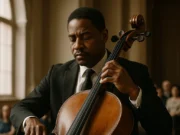
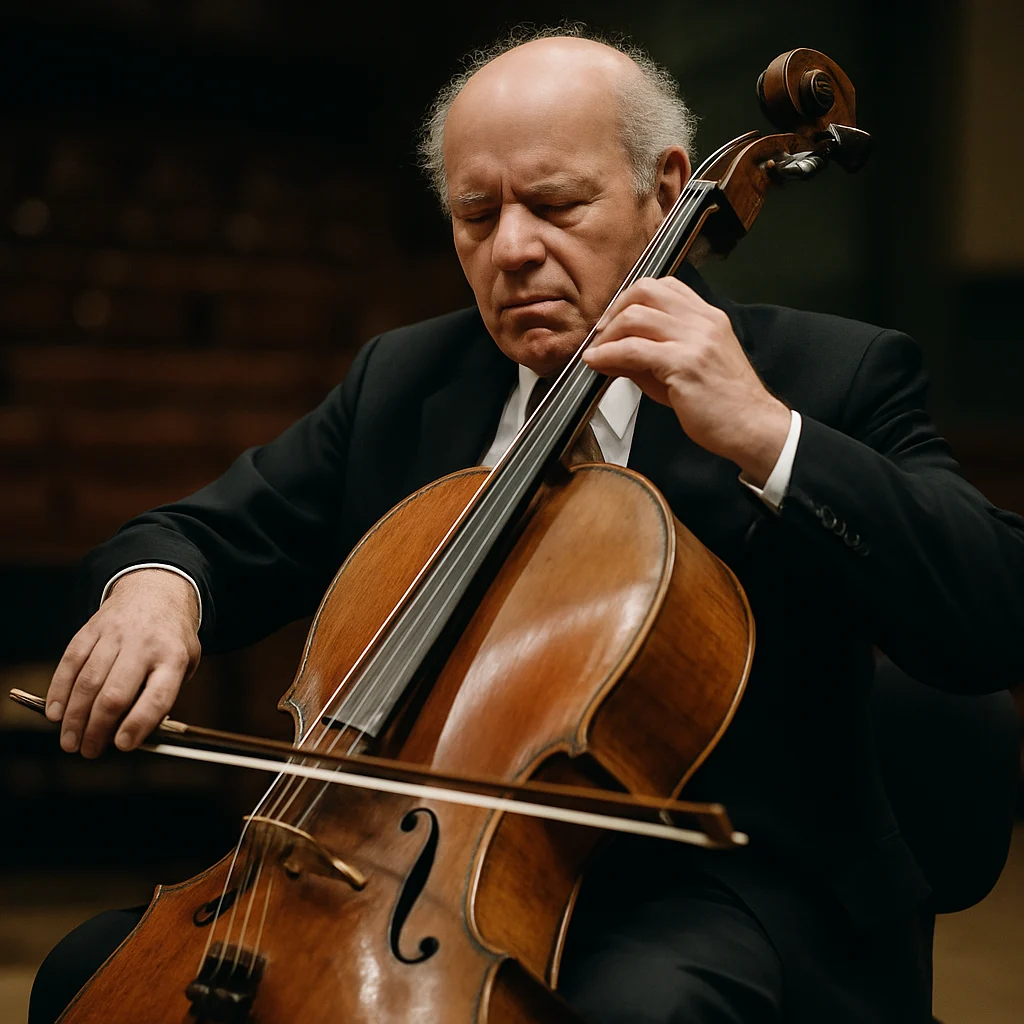
The cello has inspired some of the most moving music ever composed.
This is largely due to the remarkable individuals who mastered the instrument. From the rich, sonorous tones of Pablo Casals to the electrifying presence of Jacqueline du Pré, the most outstanding cellists have transformed the cello’s role in music. Whether delivering Johann Sebastian Bach’s Cello Suites with meticulous finesse or performing Antonín Dvořák’s Cello Concerto with heartfelt intensity, these artists have left an enduring impact on classical music.
This article honors the greatest cellists in history—virtuosos who have deeply influenced our appreciation of the cello by combining spectacular technique with powerful emotion. Whether you admire the lush lyricism of Mstislav Rostropovich, the innovative interpretations of Yo-Yo Ma, or the progressive styles of today’s leading performers, these cellists have forever altered the musical landscape. Join us as we spotlight the legends who have defined the sacred art of cello playing.
Notable Cellists Across Centuries
21. Beatrice Harrison (1892–1965)
British cellist Beatrice Harrison made history with the first recording of Elgar’s Cello Concerto in 1920, conducted by the composer himself. In 1924, she notably participated in one of the BBC’s earliest live outdoor broadcasts, performing duets with nightingales in her garden. Esteemed figures like conductor Sir Henry Wood and composers Edward Elgar and Charles Villiers Stanford admired her exceptional playing.
20. Sol Gabetta (b. 1981)
Argentine cellist Sol Gabetta began cello lessons at four and won her first competition by age ten. Celebrated for her pure tone, nuanced control of timbre, and expressive performance style, Gabetta has marked herself as a unique and compelling voice among contemporary cellists.
19. Alisa Weilerstein (b. 1982)
The youngest on this list, American Alisa Weilerstein debuted with the Cleveland Orchestra at just 13, performing Tchaikovsky’s Variations on a Rococo Theme. From a musical family, she regularly performs piano trios with her parents as the Weilerstein Trio. A passionate advocate for modern compositions, she has collaborated with composers such as Osvaldo Golijov, Lera Auerbach, and Joseph Hallman, earning acclaim for her deeply sophisticated interpretations.
18. Gautier Capuçon (b. 1981)
French cellist Gautier Capuçon, brother of violinist Renaud Capuçon, started cello studies at age five. Renowned for merging technical excellence with emotional richness, he exhibits a warm, refined tone and fluid expressiveness. Capuçon also champions contemporary music and mentors emerging artists, solidifying his role as a prominent cellist and ambassador for the art.
17. Truls Mørk (b. 1961)
Norwegian cellist Truls Mørk combines technical mastery with artistic integrity. Known for deeply intense and thoughtful performances, he features a pure tone and intricate vibrato. Mørk has premiered over 30 new works, bridging classical traditions with modern repertoire. His recordings of Shostakovich, Prokofiev, and Dvořák have earned prestigious awards, including Grammy nominations and a Grammy win for his interpretations of Britten’s Cello Suites.
16. Lynn Harrell (1944–2020)
American cellist Lynn Harrell was noted for his rich, warm sound and dynamic versatility. Educated under Leonard Rose at Juilliard and Orlando Cole at the Curtis Institute, Harrell enjoyed a nearly six-decade career as a soloist, chamber musician, and teacher, collaborating with leading orchestras worldwide.
15. Heinrich Schiff (1951–2016)
Austrian cellist and conductor Heinrich Schiff, born to musical parents, received critical acclaim for his recordings of Bach’s Cello Suites, Shostakovich’s concertos, and Brahms’ Double Concerto. After a stroke in 2008, Schiff ceased performing but left a lasting legacy as one of the finest cellists of his era.
14. Natalia Gutman (b. 1942)
Russian cellist Natalia Gutman was a prodigy who began cello studies at five and trained with Mstislav Rostropovich at the Moscow Conservatory. She has performed with top orchestras under maestros like Claudio Abbado, Bernard Haitink, and Gustavo Dudamel. With a commanding tone and charismatic presence, she deserves recognition among the leading cellists.
13. Steven Isserlis (b. 1958)
British cellist Steven Isserlis hails from a distinguished musical family. An accomplished soloist, chamber musician, educator, and author, he is celebrated for his scholarly approach and mastery of gut strings. Isserlis champions contemporary music and has premiered works by composers such as John Tavener, Thomas Adès, and Wolfgang Rihm.
12. Mischa Maisky (b. 1948)
Known for his distinctive wild hair and impassioned playing, Mischa Maisky is an electrifying performer who favors heartfelt expression over rigid precision. Trained by Mstislav Rostropovich and Gregor Piatigorsky, he blends rich tone with powerful stage presence, making each concert a uniquely memorable experience.
11. Luigi Boccherini (1743–1805)
The earliest figure on this list, Italian composer and cellist Luigi Boccherini was a virtuoso who transposed violin repertoire for cello performance. He composed extensively, including over 100 string quintets, nearly 100 string quartets, several string trios and sonatas, approximately 30 symphonies, and 12 cello concertos—among them the enduringly popular Concerto in B flat.
10. David Popper (1843–1913)
Czech cellist and composer David Popper was renowned for his remarkably challenging compositions and cello études, including four concertos and a Requiem for three cellos and orchestra. His Op. 73 “High School of Cello Playing” remains a widely used study work for advanced cellists.
9. Paul Tortelier (1914–1990)
French cellist Paul Tortelier upheld the Romantic tradition with his refined technique and nuanced bowing. His tone balanced concentration and warmth. Touring globally post-WWII, Tortelier excelled as a soloist and educator, closely associated with Richard Strauss’ Don Quixote, Elgar’s Cello Concerto, and Bach’s Cello Suites.
8. Pierre Fournier (1906–1986)
Dubbed the ‘aristocrat of the cello,’ Pierre Fournier combined elegant playing with a delicate, singing tone. Overcoming childhood polio, he maintained a distinguished career for over fifty years. Fournier’s style contrasted with contemporaries like Rostropovich, favoring noble refinement. He formed a celebrated trio with violinist Henryk Szeryng and pianist Wilhelm Kempff, particularly noted for Beethoven interpretations.
7. Gregor Piatigorsky (1903–1976)
Russian-born Gregor Piatigorsky trained at the Moscow Conservatory and served as principal cellist with the Berlin Philharmonic under Wilhelm Furtwängler. Known for his warm, lyrical tone, charismatic presence, and sharp wit, he was a passionate chamber musician and revered teacher.
6. János Starker (1924–2013)
Hungarian-American cellist János Starker was a prodigy performing publicly from six years old. Studying at the Franz Liszt Academy, he drew inspiration from luminaries like Zoltán Kodály and Béla Bartók. Later a distinguished professor at Indiana University’s Jacobs School of Music, Starker was known for virtuosic technique, pure tone, and a restrained approach to Romantic vibrato.
5. Yo-Yo Ma (b. 1955)
Born in Paris to Chinese musical parents, American cellist Yo-Yo Ma was a child prodigy debuting publicly at age five. By seven, he was performing for US presidents Eisenhower and Kennedy. His early collaborations with Leonard Bernstein and Isaac Stern propelled him to global fame, making him an internationally recognized figure in classical music.
4. Emanuel Feuermann (1902–1942)
Ukrainian-born Emanuel Feuermann, praised by conductor Arturo Toscanini as unparalleled, dazzled audiences with his virtuosity. After moving to America in 1937, he partnered with violinist Jascha Heifetz and pianist Arthur Rubinstein to form a celebrated trio. His sudden death from a post-operative infection tragically curtailed plans to record the complete piano trio repertoire.
3. Jacqueline du Pré (1945–1987)
British cellist Jacqueline du Pré became an icon with her passionate performances before her career was tragically cut short by multiple sclerosis in her late twenties. Her emotive recording of Elgar’s Cello Concerto remains legendary, capturing the essence of her deeply expressive style. Filmmaker Christopher Nupen immortalized her vibrant personality and artistry in chamber music films with Daniel Barenboim, Itzhak Perlman, and others.
2. Pablo Casals (1876–1973)
Pablo Casals revolutionized cello playing, hailed by violinist Fritz Kreisler as ‘the greatest musician ever to draw bow’. He performed for Queen Victoria and later for President John F. Kennedy. Casals’ rediscovery of Bach’s solo cello suites redefined their status from mere technical exercises to masterpieces. Known for his strong political beliefs, he lived in exile for decades, ceasing public performances in protest against Fascism.
The Greatest Cellist of All Time
1. Mstislav Rostropovich (1927–2007)
Mstislav Rostropovich is remembered as a towering figure whose collaborations with composers like Shostakovich, Prokofiev, and Britten inspired significant cello repertoire of the 20th century. His premieres of nearly 200 works showcased his unmatched virtuosity and helped elevate standards of cello performance worldwide. His powerful legacy continues to influence generations of cellists.
Images courtesy of Getty Images.
— The Violin Post Editorial Staff