
























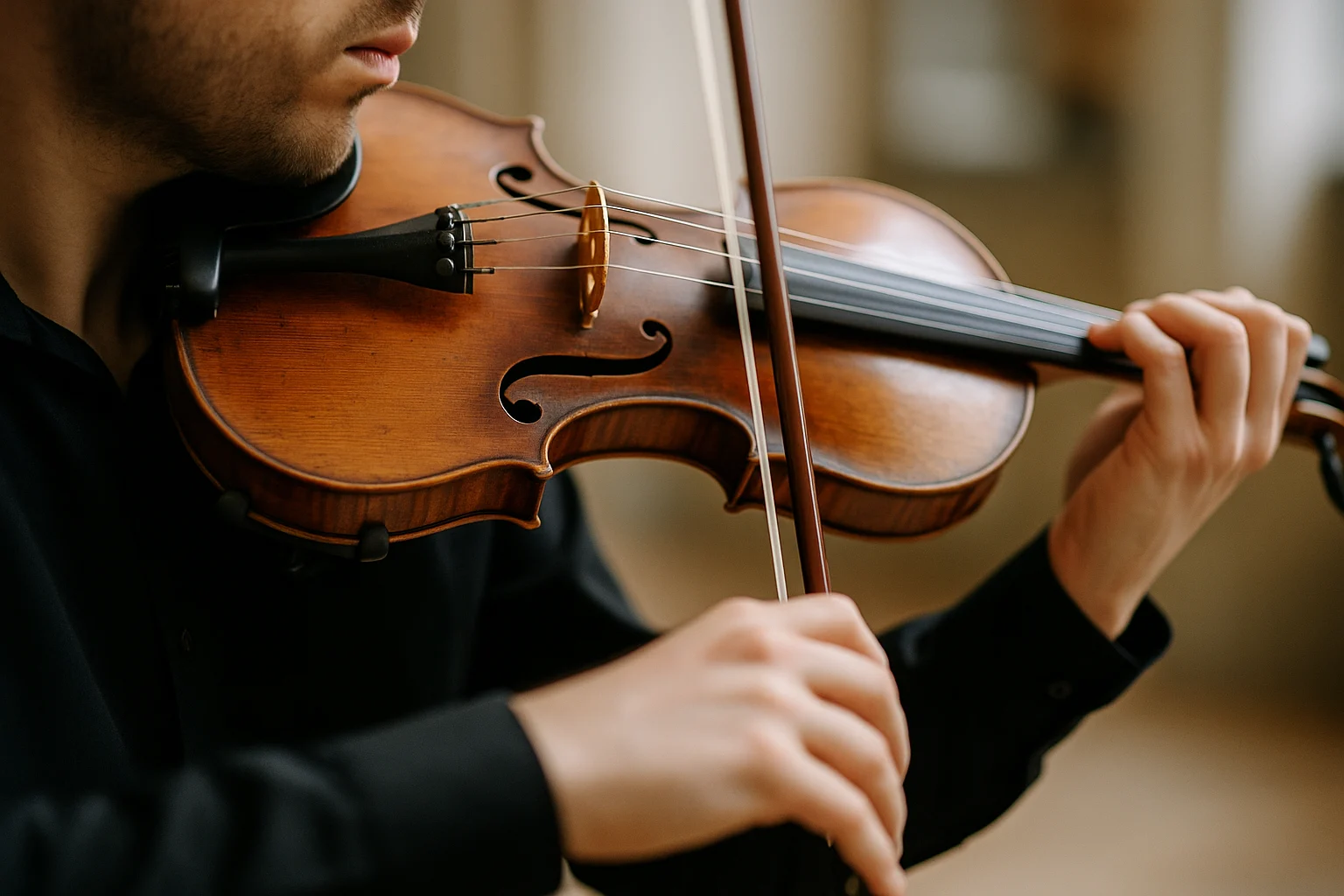
A recent study published in the journal Nature investigates how the material composition of violin strings affects timbre perception, focusing on the spectral and formant properties of the sound produced. Conducted under controlled conditions, the research offers empirical data on the acoustic implications of using various string materials in violin performance.
Controlled Study Examines Impact of String Materials on Violin Timbre Perception – Research & Innovation
Violin timbre—the unique quality or color of the instrument’s sound—is influenced by multiple factors, including the body of the instrument, the bowing technique, and importantly, the strings themselves. Strings made from different materials, such as gut, synthetic cores, or various metal alloys, are known to produce distinct tonal characteristics, but their specific impacts on acoustic spectra and formant structures have not been fully quantified in rigorous scientific contexts until now.
This study is particularly relevant for professional violinists, educators, students, luthiers, and string manufacturers who seek to understand and optimize the relationship between string material composition and sound quality. By elucidating the spectral changes and formant shifts associated with different string types, musicians can make more informed choices tailored to their artistic intentions and technical requirements.
Within the broader classical music ecosystem, the research contributes to the ongoing dialogue about instrument setup and sound production. It complements empirical approaches aimed at refining performance practices and instrument design, reflecting an intersection of scientific inquiry and musical artistry. Scientific evaluations of timbral elements aid in preserving the instrument’s tradition while facilitating innovation, which is critical in a field that balances historical authenticity with evolving performance standards.
While the study centers on acoustic measurements, its findings underscore the subjective nature of timbre perception in musical contexts. Further research integrating psychoacoustic and perceptual analyses may provide deeper insights into how performers and listeners experience tonal differences. Nonetheless, this work advances a foundational understanding of how material variables affect the complex sound signature of the violin, offering valuable perspectives for stakeholders within the string instrument community.
— The Violin Post Editorial Staff