
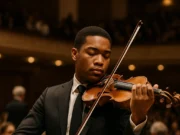
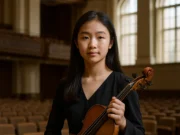
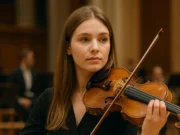



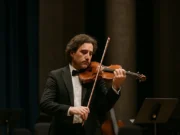
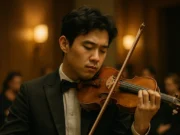
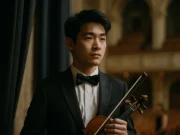
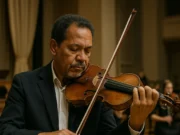

The Dallas-Fort Worth classical music scene witnessed another significant event earlier this week with the culmination of the Dallas International Violin Competition. Following shortly after the Van Cliburn International Piano Competition in neighboring Fort Worth, the violin competition’s three finalists showcased their talents in a concert at Moody Performance Hall before the results were revealed.
Winners Announced at Dallas International Violin Competition – News
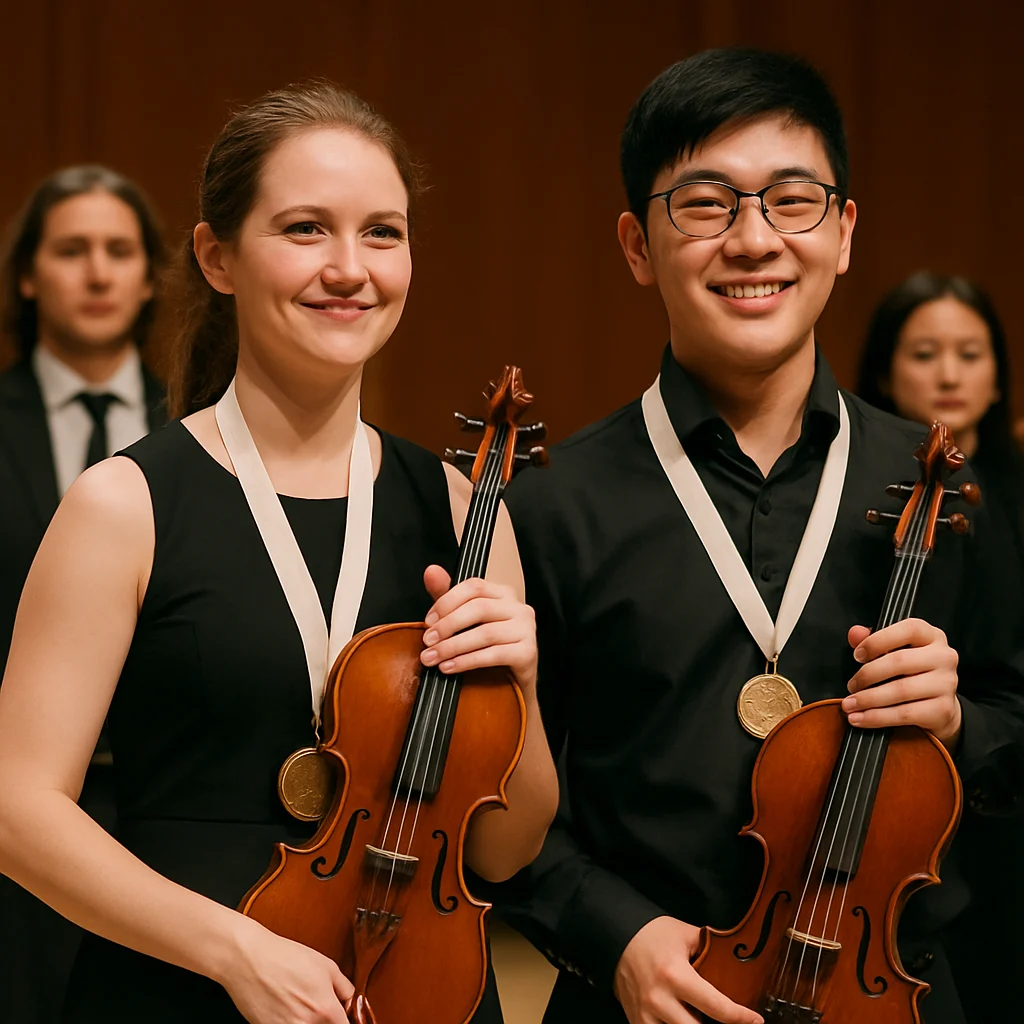
The top honor, a $2,500 first prize, was claimed by American violinist Laurel Gagnon, who is currently pursuing her studies at the Yale University School of Music. Along with the monetary award, Gagnon will also receive a future solo engagement with the Dallas Chamber Symphony, the organization that presented the competition.
Hong Kong native Hiu Sing Fan earned the $1,500 second prize, as well as the $500 audience choice award. Fan is pursuing a Doctor of Musical Arts degree at Northwestern University. The third prize of $1,000 was awarded to Alice Lee, a Canadian violinist studying at the New England Conservatory.
During the concert, each finalist performed a violin concerto accompanied by the Dallas Chamber Symphony under the baton of guest conductor Peter Bay, who is the music director of the Austin Symphony Orchestra. Gagnon performed Johannes Brahms’ Violin Concerto, while Fan and Lee each took on Jean Sibelius’ Violin Concerto.
The biennial competition invited violinists aged 18 to 35 to apply. From initial applications and video submissions, 16 participants were selected for the live rounds held on June 12 and 13 at the Murchison Performing Arts Center on the University of North Texas campus in Denton. Each quarterfinalist performed a concerto with piano accompaniment, followed by semifinal recitals featuring unaccompanied solo violin works judged by a panel of three professional violinists and educators.
Despite being a relatively new and less widely known contest, the competition attracted performers exhibiting impressive technical mastery and interpretive depth. Audience members and judges alike noted the strong individual voices of the finalists, though opinions on their rankings might vary.
Some critiques emerged regarding the dynamics during performances. For instance, the forceful bowing on fortissimo double-stops was occasionally felt to be excessive, especially within Moody Hall’s intimate setting of approximately 700 seats, which is notably smaller than many large orchestral venues. In particular, this approach was considered less fitting for the Brahms concerto, which benefits from more restrained phrasing. Gagnon’s selection of an exuberant Fritz Kreisler cadenza was another point of debate, as some listeners felt it overshadowed the piece.
Nonetheless, Gagnon’s musicianship was evident. The slow movement’s introduction by Bay and principal oboist Elise Belk set an eloquent tone to which Gagnon responded with sensitive timing and nuanced phrase shaping. The finale was paced slightly more deliberately than some might expect, yet this aligned with Brahms’ marking of “happy allegro, but not too lively.”
Fan and Lee both impressed with their renditions of Sibelius’ concerto, tackling its rapid passages, double-stops, and high pianissimos with assuredness. Lee’s performance diverged from the traditional Nordic coolness often associated with the piece, instead delivering a passionate interpretation alternating between earthy and ethereal qualities and demonstrating considerable freedom during the embedded cadenza. In contrast, Fan’s Sibelius was characterized by a more conventional cool focus throughout.
With the orchestra’s woodwind and brass sections sized for a large 2,000-seat hall, conductor Peter Bay faced the challenge of balancing the ensemble with fewer string players. Despite occasional moments when flutes, clarinets, or horns became overly prominent, Bay and the chamber musicians maintained an overall impressive balance and consistently supported the soloists with secure and sensitive musical direction.
The event experience might have been enhanced by discouraging applause after each movement, as multiple interruptions occurred during the performances. Late seating during Lee’s performance’s slow movement was another unfortunate distraction.
— The Violin Post Editorial Staff