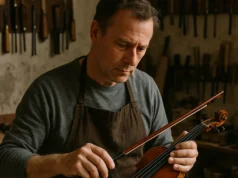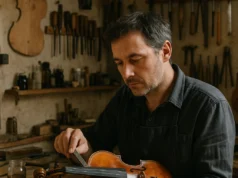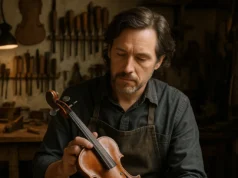

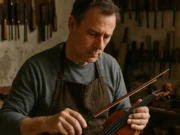
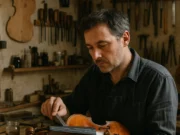
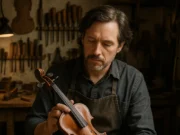
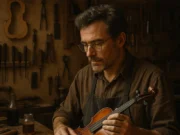
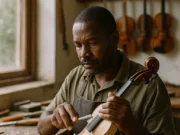
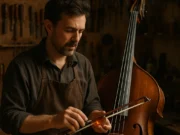
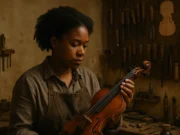
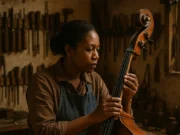
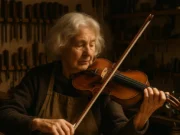
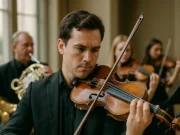
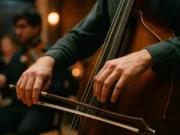
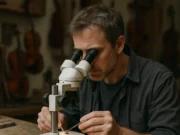
The art of violin and bow making, a specialized craft steeped in centuries-old tradition, faces increasing uncertainty, as exemplified by a skilled maker from Crewe who has expressed deep concerns about the future of his profession.
This artisan, whose work involves the meticulous shaping and finishing of violins and bows, emphasizes that sustaining this profession is becoming ever more difficult. Factors such as the scarcity of apprentices willing to commit to the lengthy and demanding training, changing market demands, and the influx of mass-produced instruments challenge the viability of independent craftsmen.
Traditionally, luthiers uphold standards of quality and sound that machines cannot replicate, but maintaining such standards requires not only exquisite expertise but also the patience to nurture and pass on knowledge. The Crewe maker’s apprehension highlights a wider issue within the classical music community regarding the preservation of artisanal skills that contribute to the richness of musical expression.
Musicians, especially professionals and serious students, benefit profoundly from instruments and bows crafted by dedicated luthiers. Such items often deliver superior tonal qualities and responsiveness, vital for nuanced performances. The decline of bespoke violin making could thus have ripple effects, constraining options for performers and impacting how the instrument’s unique voice continues to be explored.
It also raises questions for the cultural institutions and educators who play a role in fostering appreciation and development of these crafts. Without sustained support, the pipeline for future makers may dry up, and with it, a deeply rooted element of musical heritage might fade.
Why this matters
- This report sheds light on the fragility of traditional violin and bow making amidst modern economic and cultural pressures.
- It concerns a broad spectrum of stakeholders: musicians seeking quality instruments, luthiers preserving artisanal knowledge, students contemplating career paths, and institutions committed to cultural heritage.
- The situation signals potential shifts in the availability and diversity of handcrafted instruments, affecting performance practice and instrument markets.
- Watching how communities respond—whether through education, funding, or advocacy—will be critical to sustaining this specialized craft.
- The story underscores the ongoing dialogue about balancing tradition and innovation in classical music’s evolving landscape.
— The Violin Post Editorial Staff