











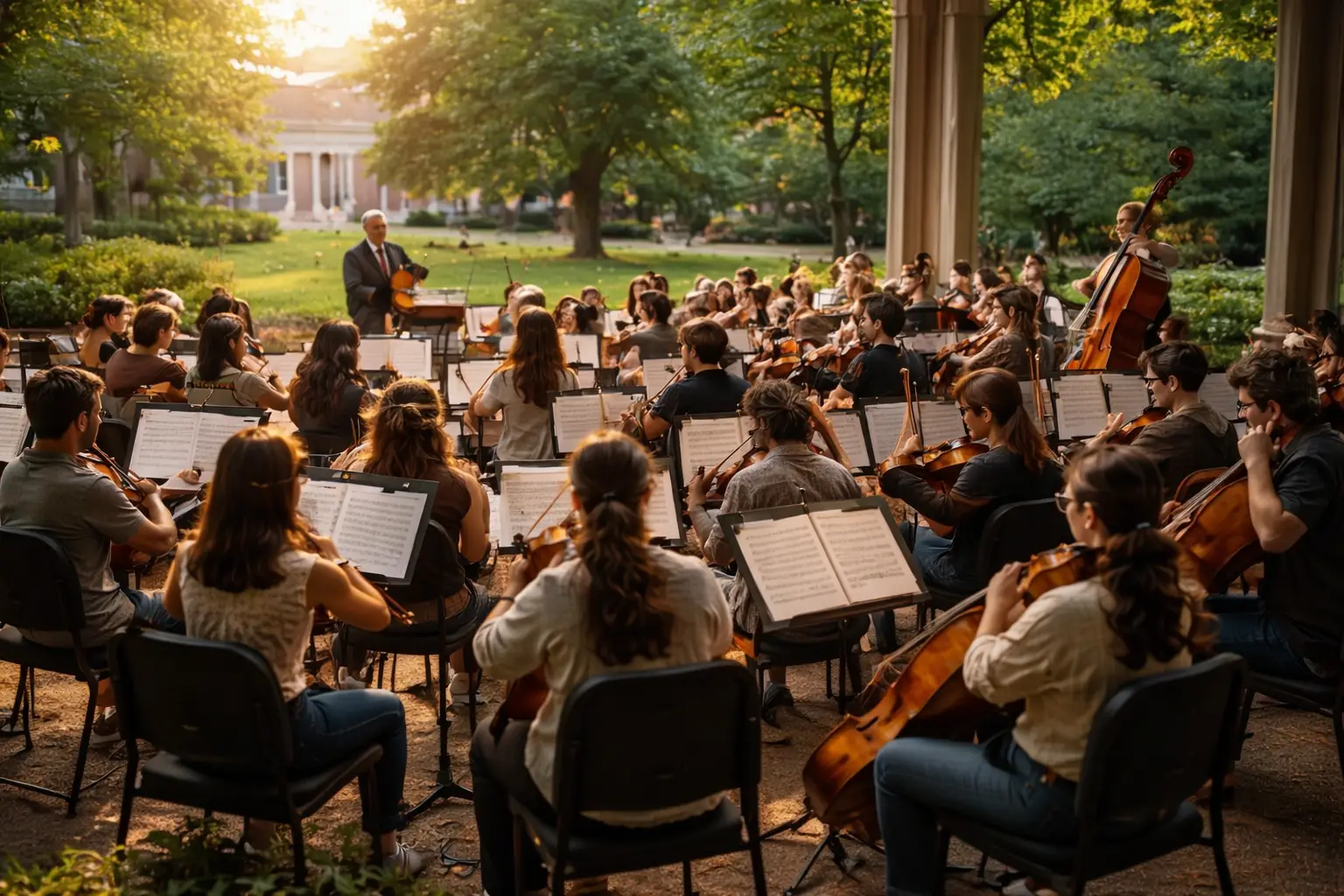
Following the dissolution of the Eastern Music Festival in October 2025, efforts are now underway to revive the long-running summer institution under a new organisational structure and name.
Eastern Music Festival May Return in 2026 Under a New Name – Concerts & Events
After 64 seasons, the Festival’s board of directors voted to close the organisation following prolonged negotiations with its faculty musicians, which ultimately failed to produce a mutually acceptable labour agreement. The decision marked the end of one of the most established summer music festivals in the United States.
However, a newly formed group is now seeking to relaunch the Festival in time for the summer of 2026, operating under the proposed name Eastern Festival of Music (EFM).
Among those leading the initiative is Barbara Morgenstern, whose husband, Sheldon “Shelly” Morgenstern, was the original founder of the Eastern Music Festival in the 1960s. Speaking to Public Radio for the Piedmont, Morgenstern confirmed that the group has already secured USD $1 million in pledged donations, signalling strong early support for the project.
According to reports from The Greensboro Thread, Morgenstern has been a vocal supporter of the Festival’s faculty musicians throughout the challenging two-year period following their decision to unionise. She has stated that the relaunch plan prioritises retaining the full faculty, alongside offering salary increases and housing stipends, made possible by the newly raised funds.
Crucially, the Festival’s long-time music director, Gerard Schwarz, has agreed to continue in his role. Morgenstern is expected to serve as chair of the new board, alongside five additional board members.
At present, Guilford College is being considered as the host venue for the proposed 2026 edition, pending approval from the college’s administration.
Reflecting on the Festival’s significance, Morgenstern described it as “a cultural gem for Greensboro,” adding that its disappearance would have represented a significant loss for the local community.
“To me, it’s very important to the community,” she said. “It would have been a real shame if it had actually ceased to exist.”
She also expressed optimism about the long-term prospects of the renewed organisation, emphasising the need for financial stability to avoid repeating past challenges.
“They’re excited about doing what they’ve done so well for over six decades,” Morgenstern said. “I think we have a real future if we can get our financial ship in order and not have this happen again.”
While formal confirmation of the 2026 Festival is still pending, the initiative represents a significant step toward preserving the artistic legacy of one of America’s most enduring summer music festivals—this time with a renewed governance model and a fresh identity.
— The Violin Post Editorial Staff