



































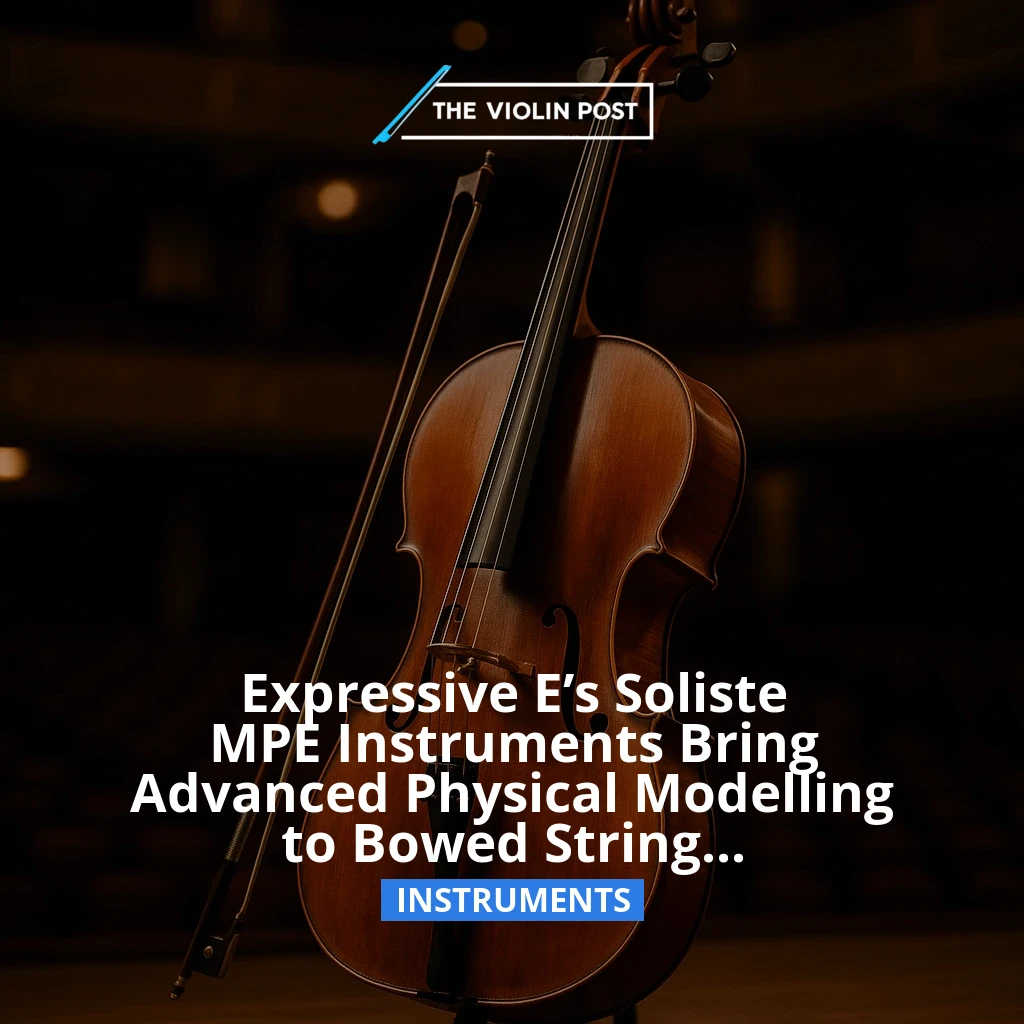
Paris-based company Expressive E has introduced its Soliste series of MPE (MIDI Polyphonic Expression) string instruments, designed to replicate the complex tactile and acoustic responses of bowed string instruments through advanced physical modelling technology. These instruments are engineered to respond authentically to the nuanced dynamics and articulations of real bowing, allowing performers digital control with a naturalistic feel under the fingers.
Expressive E, known for its innovative electronic music hardware, has sought to address one of the enduring challenges in digital string performance: capturing the expressiveness and immediacy of acoustic bowing. The Soliste MPE instruments simulate physical interactions, meaning that the player’s finger and bow movement directly influence the sound production process as they would on a traditional violin, viola, or cello. This contrasts with sampling or purely synthetic sound sources by modelling the physics of string vibration and bow pressure.
The company’s implementation involves multidimensional control enabling subtle variations in tone color and dynamics, something critical for string players who rely on nuanced bow speed, pressure, and position for expressive phrasing. By incorporating continuous control of these parameters via an MPE-compatible interface, the Soliste aims to provide a digitally native yet organic playing experience.
Musicians and composers working in contemporary music and electronic genres may find these instruments expand possibilities for integrating string expression within electronic setups. The tactile fidelity helps bridge the gap for classically trained players transitioning into digital realms or for producers seeking realistic string articulations without the limitations of prerecorded samples.
While full adoption by traditional classical performers remains to be seen, the Soliste series represents a significant step in evolving electronic string performance tools. The physical modelling approach may also influence future instrument design, contributing to hybrid systems that combine acoustic instrument craftsmanship with cutting-edge technology.
Why this matters
- The Soliste MPE instruments address a key limitation in digital string instruments by physically modelling tactile bowing responses, enhancing expressive control.
- They impact musicians, composers, and producers who integrate electronic and acoustic elements, particularly in contemporary and experimental music contexts.
- This development may inspire new hybrid instrument designs, blending traditional lutherie with digital innovation.
- Music educators and students exploring electronic performance can benefit from tools that preserve classical technique while expanding sonic possibilities.
- Advances like these contribute to the evolving ecosystem of classical and electronic music interaction, potentially reshaping performance practice and instrument development.
— The Violin Post Editorial Staff