



























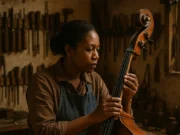






Höfner, the German luthier renowned worldwide for its finely crafted string instruments, has filed for bankruptcy, marking a significant moment in the history of musical instrument manufacturing. Founded in 1887, the company has long been celebrated for blending traditional craftsmanship with innovative design, particularly in the realm of electric bass guitars.
Perhaps most famously recognized as the maker of Paul McCartney’s renowned violin-shaped bass, Höfner’s instruments have left an indelible mark on modern music. McCartney’s personal homage to the company following the bankruptcy announcement underscored the cultural and historical importance of the brand. The bass, often called the “Beatle Bass,” symbolized a unique blend of classical violin aesthetics with contemporary electric music and became an emblematic guitar of the 1960s and beyond.
The bankruptcy filing is a consequence of complex market dynamics intensified by shifts in consumer demand, supply chain challenges, and increased competition. Such financial distress is illustrative of broader pressures faced by traditional instrument makers amid globalization and rapid technological change. Höfner’s announcement has raised concerns about the future availability and production of its cherished models, along with implications for employees and artisans intimately linked to the brand’s craftsmanship.
Industry observers note that despite these challenges, Höfner’s bankruptcy might open pathways for restructuring and revitalization, potentially under new ownership or management committed to preserving the company’s heritage. The situation invites a broader conversation on sustaining artisanal instrument manufacturing in an era increasingly dominated by mass production and digital alternatives.
For musicians, particularly those who value the tonal qualities and legacy of Höfner instruments, this news incites both apprehension and hope. The company’s legacy is ingrained not only in popular music history but also within certain niches of classical and jazz performance, where craftsmanship and timbre hold significant importance.
Looking forward, the classical music and lutherie communities will be watching closely as Höfner navigates bankruptcy proceedings. The outcome may reshape the landscape of instrument manufacturing, highlighting the importance of preserving artisanal traditions while adapting to modern economic realities.
Why this matters
- The bankruptcy of a storied manufacturer like Höfner underscores the precarious position of traditional instrument makers in today’s global market.
- Musicians who rely on Höfner instruments—both for their distinctive sound and cultural significance—face uncertainty regarding future production and support.
- The situation highlights challenges for luthiers maintaining artisanal craftsmanship amid mass-manufactured competition and evolving musical technologies.
- Institutional players, including orchestras and conservatories, may need to reassess sourcing and maintenance strategies for such instruments.
- Höfner’s future developments could signal wider trends affecting the sustainability of niche instrument-making businesses worldwide.
— The Violin Post Editorial Staff