











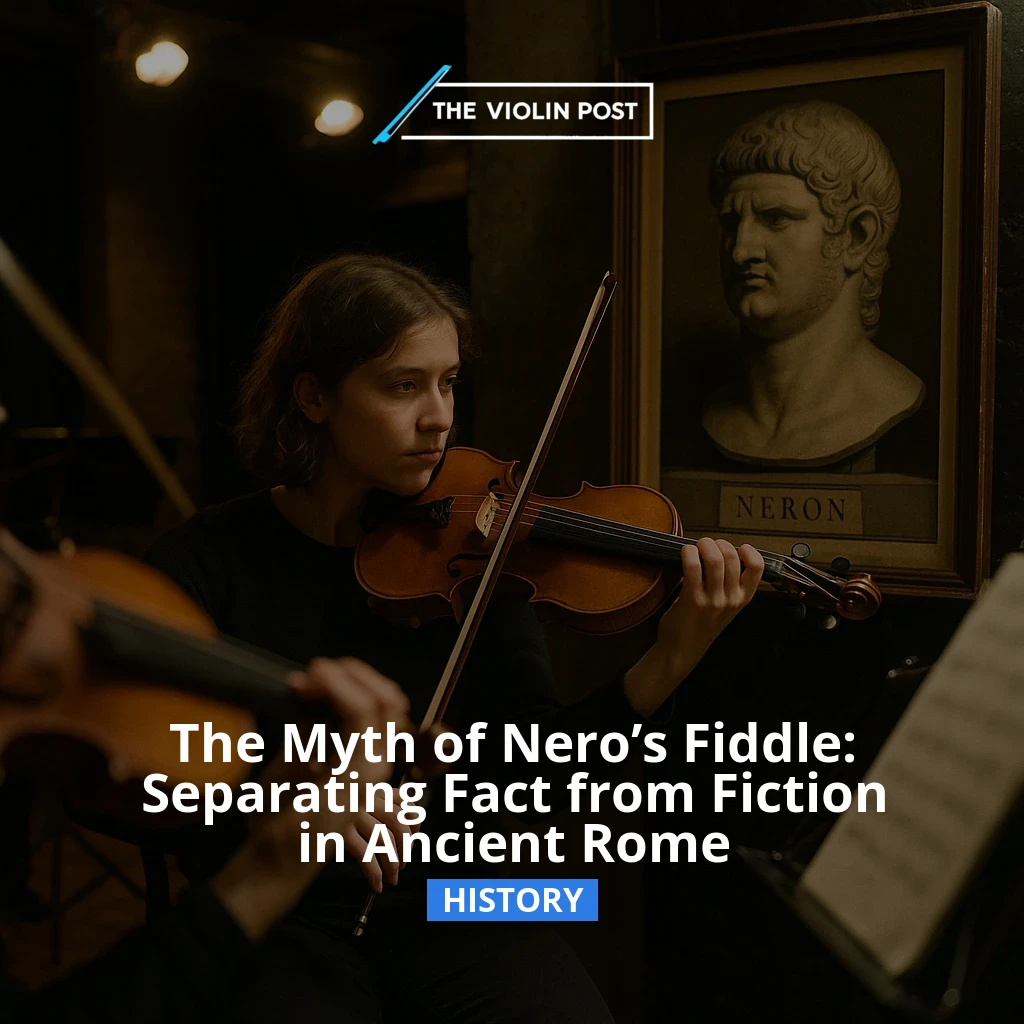
The story of Emperor Nero fiddling while Rome was engulfed in flames has long been embedded in cultural consciousness, symbolizing apathy amidst disaster. However, modern scholarship suggests the dramatic narrative is a myth rather than historical fact, prompting a reassessment of Nero’s role during the Great Fire of Rome in 64 AD.
Contemporary sources from the Roman era provide conflicting accounts of Nero’s actions as a conflagration ravaged the city. Notably, the fiddle, or violin, did not exist in Ancient Rome, raising immediate doubts about the literal accuracy of the claim. Some ancient historians allege Nero recited poetry or sang while watching the city burn, but these testimonies often stem from hostile sources written after his death, raising questions about their reliability.
Historical analysis indicates that Nero was not in Rome at the outbreak of the fire, reportedly at his villa in Antium, some distance from the capital. Upon learning of the disaster, he is documented to have returned to organize relief efforts, opening public buildings and his own palaces to shelter displaced residents and initiating rebuilding programs.
This distortion of Nero’s image may be tied to political motives. Succeeding emperors and senatorial elites had interests in vilifying Nero’s legacy, framing him as neglectful or even responsible for the fire to consolidate their own authority. Over centuries, the narrative of Nero ‘fiddling’ became a powerful metaphor for tyrannical negligence, despite the shaky historical foundation.
Contextualizing the Myth
The Great Fire of Rome was a catastrophic event with significant social and architectural consequences, reshaping the city’s landscape and imperial policies. Misrepresenting Nero’s conduct complicates our understanding of the disaster’s management and its political aftermath.
For musicians and historians alike, the myth encapsulates the dangers of anachronistic assumptions about historical figures and their activities. It also highlights how musical instruments can transform into cultural symbols, here embodying misplaced blame and disdain.
In lutherie and classical music culture, the ‘Nero fiddled while Rome burned’ allegory serves as a cautionary tale against oversimplification and the perils of attributing artistic detachment to crisis situations. It encourages a more nuanced examination of the relationship between music, leadership, and historical memory.
Why this matters
- This reassessment clarifies a pervasive historical misconception, encouraging critical engagement with longstanding narratives.
- Musicians and music scholars gain perspective on how cultural symbols involving instruments influence public perception beyond music itself.
- Historians and educators can refine how ancient sources and their biases are interpreted and presented to contemporary audiences.
- Understanding the distortion of Nero’s image informs discussions around propaganda, legacy, and the politics of cultural memory.
- For classical music culture, it emphasizes the importance of context in associating musical instruments with historical or moral symbolism.
— The Violin Post Editorial Staff