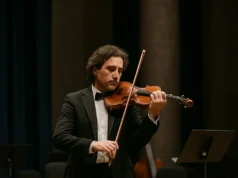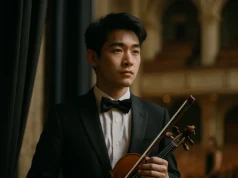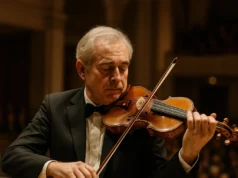

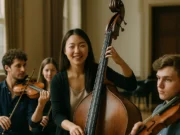
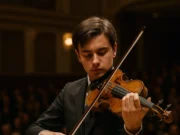
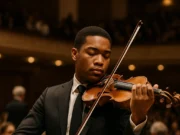
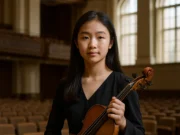
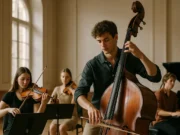
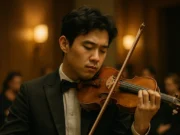
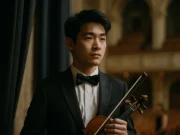


The Annecy International Animation Film Festival has welcomed a landmark entry this year with Singapore’s animated feature film The Violinist becoming the first from the city-state to be selected for its main competition program. This milestone represents a significant moment both for Singaporean cinema and for Southeast Asian animation’s growing presence on the world stage.
A New Chapter for Singaporean Animation
The inclusion of The Violinist in Annecy’s main competition is a notable acknowledgement of the artistic and narrative quality emerging from Singapore’s animation sector. Annecy is widely regarded as the preeminent festival for animated films, setting global standards and showcasing the most innovative and artistically significant works. Being the first Singaporean film to reach this platform, The Violinist not only elevates the country’s animation profile but also opens pathways for artists from the region to gain international recognition.
This achievement underlines the evolution of Singapore’s film industry, which has diversified beyond live-action and documentary genres to embrace animation as a vital storytelling medium. It also reflects broader shifts in the global animation landscape, where stories from varied cultural and national backgrounds are increasingly valued for their unique perspectives and artistic voices.
The Violinist and Its Cultural Resonance
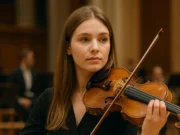
Though details of the film’s narrative and artistic style remain underreported, its title hints at an intimate connection to music and the violin’s cultural significance. The violin has long served not only as a classical music instrument but as a potent symbol of cultural identity, technical mastery, and emotional expression. For audiences and practitioners within the violin community, an animated feature titled The Violinist potentially offers a fresh lens to explore the intersection of music, history, and personal stories conveyed through animation.
This cross-disciplinary cultural dialogue is particularly important in today’s arts ecosystem, where collaborations and hybrid forms can deepen appreciation of classical music traditions and their contemporary relevance. Such a film also enriches the global tapestry of animation by infusing it with musical heritage and nuanced human experiences that resonate beyond geographic borders.
Implications for Performers, Institutions, and Audiences
For violinists, music educators, and classical music audiences, The Violinist presents an intriguing addition to the cultural conversation surrounding the instrument. It may inspire renewed interest in the violin’s expressive possibilities, connecting listeners and players to new narratives through visual storytelling.
Culturally, Singapore’s foray into this arena may encourage institutions—such as conservatories, orchestras, and arts councils—to consider animation and film as complementary avenues for outreach and education. It may also invite collaborations between luthiers, musicians, and filmmakers to further explore violin culture beyond concert halls.
Collectors and aficionados of both film and classical music could find in the film a collectible milestone, marking a convergence of artistic forms that traditionally have operated in parallel, now intersecting with fresh energy on an international stage.
Why this matters
- This is the first time a Singaporean animated film has competed at Annecy, spotlighting emerging Southeast Asian voices in animation.
- It broadens the cultural narratives available in animation, linking the violin’s musical tradition with contemporary storytelling.
- The achievement encourages cross-disciplinary engagement between classical music communities and visual arts sectors.
- Performers, educators, and audiences gain a new cultural artifact that intersects their interests in music and animation.
- It signals potential growth areas for collaboration between classical music institutions and filmmakers internationally.
Related topics
- The role of animation in expanding classical music narratives.
- How international film festivals influence national cinema industries.
- Innovations in classical music outreach through visual media.
Editorial Commentary
Historical coverage is essential because the string world is built on continuity: repertories, techniques, schools of craftsmanship, and performance traditions all gain meaning when they are understood in relation to what came before.
Articles like this therefore do more than document the past; they help readers interpret the present through a stronger awareness of musical heritage and of the people and ideas that shaped it.
About The Violin Post
The Violin Post is an international editorial platform dedicated to violin making, classical performance, competitions, instruments, and the wider culture of the string world.
Its coverage connects news reporting with specialist context for readers interested in performers, makers, educators, institutions, and musical heritage.
Related Articles
- Singapore’s The Violinist Breaks Ground at Annecy Animation Festival
- Emilio Llinas and Cleveland Museum of Art Illuminate Musical Heritage Through Violin Performance
- Unveiling the Violin’s Quiet Pulse in Caribbean Music and the Artists Sustaining Its Legacy
— The Violin Post Editorial Staff