

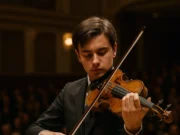
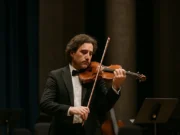
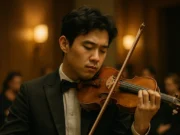
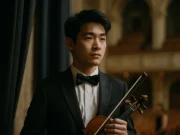
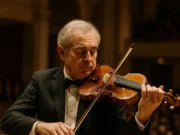

Daniel Lozakovich, a rising figure in the international violin scene, has released his debut album, a thoughtfully curated collection featuring works by Edvard Grieg, César Franck, Rodion Shchedrin (credited here as Shor-Pletnev), and Dmitri Shostakovich. This recording not only marks a milestone in Lozakovich’s career but also serves as a statement of his interpretive breadth and affinity for a repertoire spanning Romanticism to modern Russian compositions.
A Repertoire Bridging Emotional Depth and Technical Challenge
The album’s programming reveals a deliberate juxtaposition of styles and epochs. Grieg and Franck, emblematic of the late Romantic period, are celebrated for their rich harmonic language and expressive melodies. Their works demand a nuanced balance between lyricism and structural clarity, qualities Lozakovich has been praised for in live performance. By including these composers, he aligns himself with a tradition that privileges emotional immediacy and poetic sensibility.
In contrast, the inclusion of Shchedrin, a contemporary Russian composer, alongside Shostakovich, presents listeners with a more intense, sometimes stark sound world. Shostakovich’s violin repertoire is renowned for its complexity and underlying tension, often reflecting the political and personal struggles of the composer’s life in Soviet Russia. Tackling these pieces requires not only technical proficiency but also a profound understanding of their emotional and historical contexts.
Significance for Violinists and Classical Music Audiences
For performers, Lozakovich’s album provides an example of artistic courage and versatility. Engaging with such a varied repertoire on a debut recording suggests a refusal to be pigeonholed, signaling to peers and mentors alike an emerging artist’s commitment to artistic exploration. Students and young violinists may find inspiration in his approach to programming, which embraces both familiar Romantic staples and challenging 20th-century Soviet-era compositions that are less frequently recorded by young soloists.
Collectors and audiences stand to benefit from this fresh perspective, gaining access to interpretations that seek to bridge the emotive warmth of Grieg and Franck with the complexity and nuance of Shchedrin and Shostakovich. The album adds valuable discourse on how young musicians today engage with legacy compositions while incorporating contemporary voices into their repertoire.
Context Within the Contemporary Violin Landscape
In the broader ecosystem of classical music, Lozakovich’s debut reflects ongoing trends where emerging artists demonstrate a commitment to diverse and sometimes surprising repertoire choices. This approach enriches the classical canon’s performance tradition and invites classical programmers and institutions to consider more varied concert offerings.
For orchestras and festivals, artists like Lozakovich who champion such programmatic diversity can catalyze renewed interest in less mainstream works, fostering a more dynamic concert environment. Additionally, the presence of such recordings aids in keeping the violin concerto repertoire vibrant and relevant for future generations.
Why this matters
- The album highlights an emerging artist’s ability to navigate and connect different musical eras, enhancing interpretative depth.
- It impacts violinists and students by offering an example of bold repertoire choices on a professional recording debut.
- Audiences and collectors gain access to fresh interpretations that span familiar and contemporary compositions, broadening listening experiences.
- The release reflects and contributes to evolving trends in classical programming and violin repertoire exploration.
- It encourages institutions and festivals to support artists willing to engage with wide-ranging musical narratives.
Related topics
- The artistic considerations behind debut recordings for emerging violin soloists
- How 20th-century Russian composers influence contemporary violin repertoire
- The role of programming diversity in shaping modern concert audiences
Editorial Commentary
Artist-focused coverage is especially valuable because careers in the string world are built not only through performances, but through repertoire choices, collaborations, educational paths, and the ability to connect with audiences over time.
Seen from that perspective, this story helps readers place the featured musician within a broader professional and artistic conversation that matters to performers, presenters, students, and listeners alike.
About The Violin Post
The Violin Post is an international editorial platform dedicated to violin making, classical performance, competitions, instruments, and the wider culture of the string world.
Its coverage connects news reporting with specialist context for readers interested in performers, makers, educators, institutions, and musical heritage.
Related Articles
- Randall Goosby on His Enduring Affection for Lyrical Violin Concertos
- IMG Artists Adds Violinist Chloe Chua to Its Management Roster
- Sanah: The Resonance of a New Voice in Contemporary Polish Music
— The Violin Post Editorial Staff