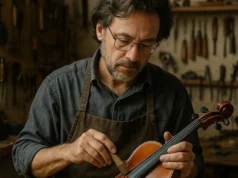


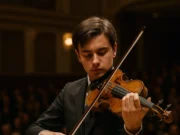
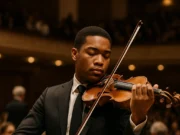
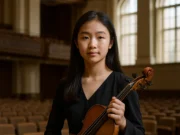
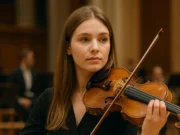
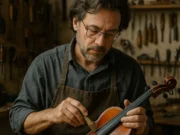
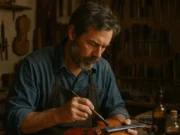
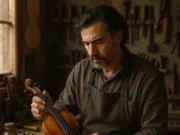

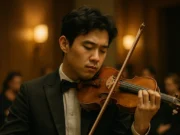

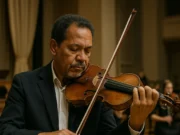

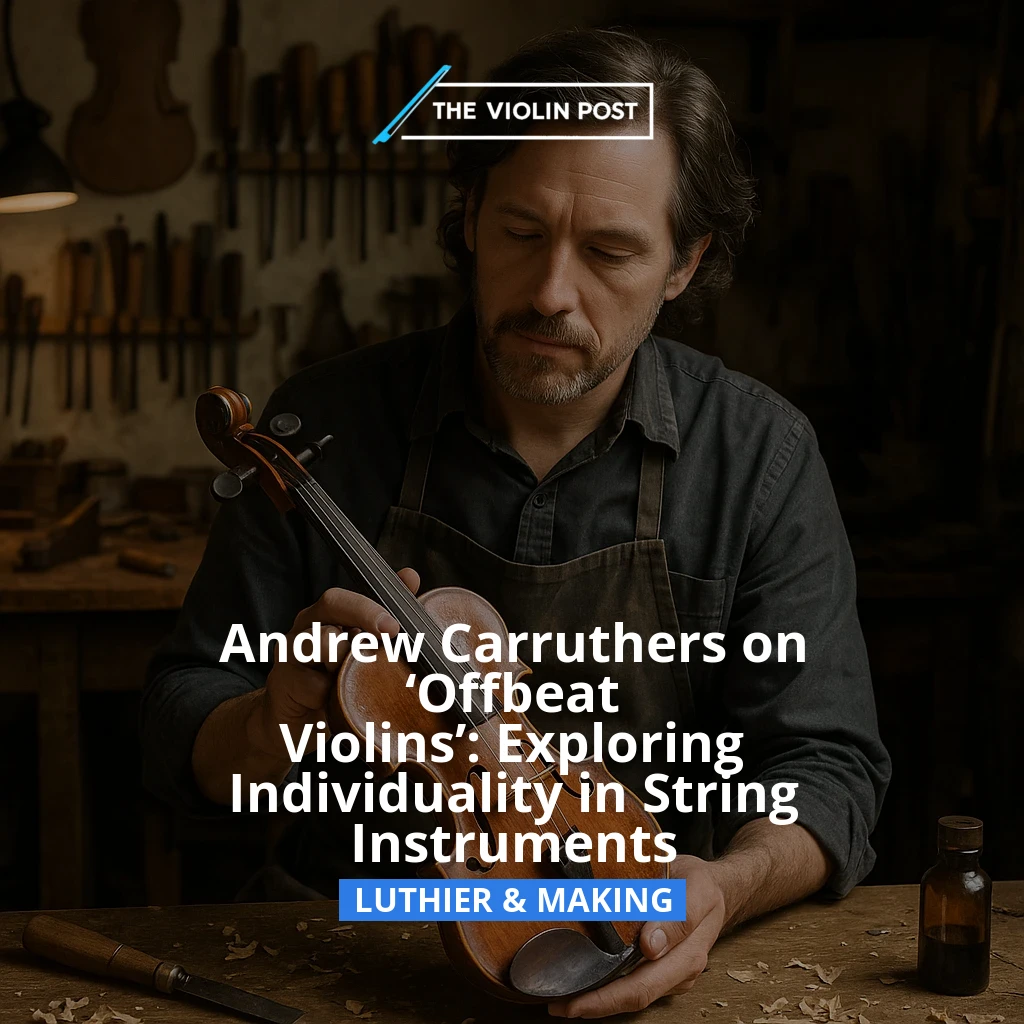
Andrew Carruthers, a violinist recognized for his eclectic approach to string instruments, recently discussed the phenomenon of “offbeat violins”—instruments that stray from conventional norms in design, origin, or sound quality. His reflections offer valuable perspective on how such violins contribute notably to both performance practice and lutherie craftsmanship, inviting musicians and makers alike to reconsider traditional definitions of excellence.
Redefining Excellence Through Unconventional Instruments
In Carruthers’s view, the allure of offbeat violins lies not merely in their rarity but in the distinctive voices they bring to the classical music repertoire. These instruments, often crafted by lesser-known makers or featuring idiosyncratic designs, challenge the uniformity frequently associated with violin construction. The subtle tonal variations and unique responsiveness of these violins provide performers with alternative palettes to express musical ideas, potentially unlocking new interpretative possibilities.
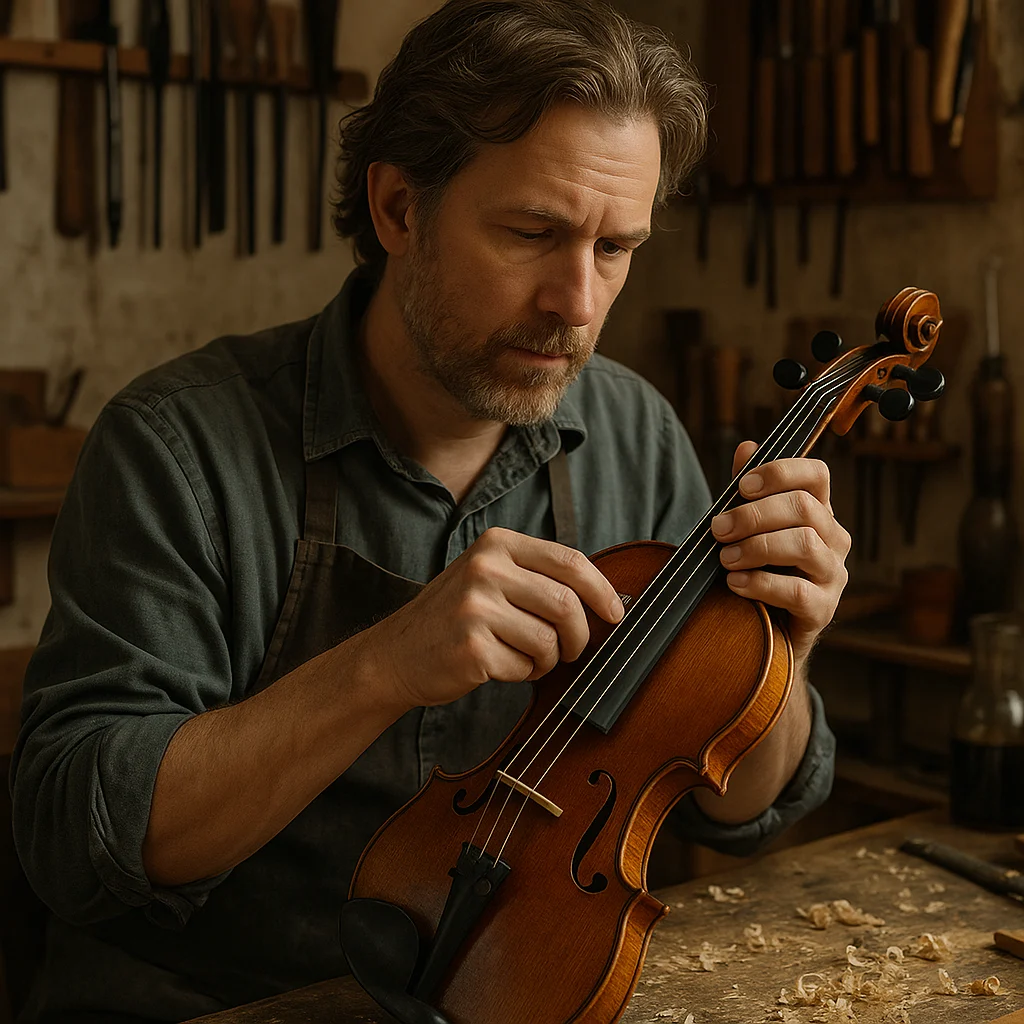
This perspective encourages a broader understanding of violin quality beyond the standard benchmarks of historical prestige or market value. It highlights an evolving appreciation for diversity in sound and craftsmanship within the violin community, appealing especially to performers seeking individuality and fresh expressive tools.
Impact on Performers, Makers, and Collectors
Musicians open to exploring offbeat violins might find in them a means to develop a personal sonic identity that stands apart in a competitive field. For emerging artists and students, such instruments can provide accessible entry points to high-quality tools without the prohibitive costs associated with canonical makers.
From the perspective of luthiers and collectors, Carruthers’s emphasis on these instruments underscores the importance of nurturing diverse traditions of instrument making. It challenges conventional market dynamics, potentially leading to increased interest in regional or experimental craftsmanship that might otherwise be overlooked.
Collectors may also reconsider acquisition strategies, valuing instruments for their individual character and historical context rather than market-driven notoriety alone. This can influence the broader cultural heritage landscape by preserving a wider array of violin-making legacies.
Looking Ahead: Broader Implications for the Classical Music Ecosystem
Endorsing offbeat violins prompts the classical music community to embrace inclusivity not only in repertoire and performance but also in the very tools of creation. It invites orchestras and institutions to recognize the artistic validity of a broader spectrum of instruments, potentially inspiring programming choices that celebrate sonic variety.
Educational establishments might incorporate these ideas into curricula, encouraging students to explore diverse instrument options and fostering critical thinking about instrument selection and sound production. Such openness could contribute to a richer and more varied future for string performance and instrument making.
Why this matters
- Highlights an underexplored facet of violin performance and craftsmanship relevant to musicians and makers.
- Offers performers alternative avenues for artistic expression through unique instrument choices.
- Encourages collectors and institutions to recognize diverse violin-making traditions.
- Reflects shifting values within the classical music ecosystem regarding tradition and innovation.
- Signals potential changes in pedagogy and programming that embrace instrumental diversity.
Related topics
- How individual instrument characteristics influence interpretative choices among violinists.
- The role of regional violin-making traditions in sustaining cultural heritage.
- Emerging trends in violin pedagogy encouraging exploration beyond canonical instruments.
Editorial Commentary
Coverage related to violin making is important because instruments are never separate from the musical culture around them. Craftsmanship, tonal research, restoration practice, and workshop traditions all influence how performers experience and present sound.
In this context, stories connected to makers and workshops help readers see how the legacy of the $instrument_label is preserved, interpreted, and renewed through the work of contemporary luthiers and institutions.
About The Violin Post
The Violin Post is an international editorial platform dedicated to violin making, classical performance, competitions, instruments, and the wider culture of the string world.
Its coverage connects news reporting with specialist context for readers interested in performers, makers, educators, institutions, and musical heritage.
Related Articles
- Connecting with the Craft: The Significance of Meeting Your Violin Maker
- From Precision Engineering to Artisanal Craft: A South African Engineer’s Journey to Violin Making
- Trailblazing in Luthiery: Nashville’s First Recorded Black Female Violin Maker
— The Violin Post Editorial Staff