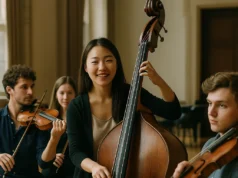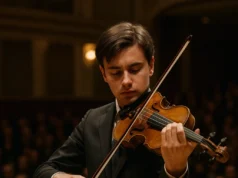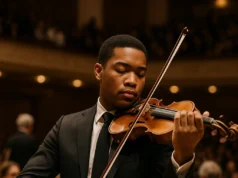

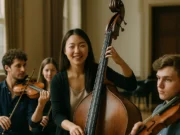
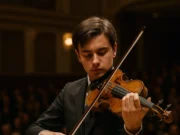
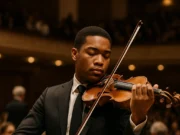
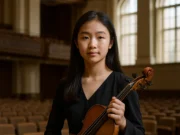
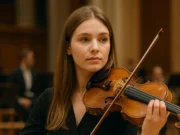
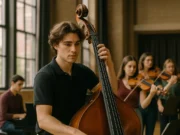
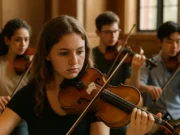
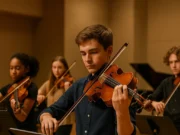
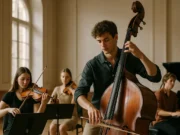
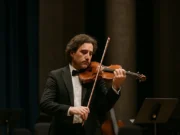
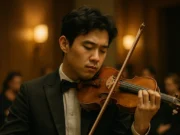
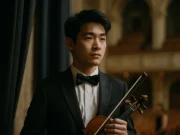
Christian Li, a violin prodigy whose promise has captivated the classical music world, recently took a rare and striking step by play-conducting a professional adult orchestra through a performance of Antonio Vivaldi’s music. This event, remarkable not only for the quality of musicianship but also for the audacity of a young artist assuming both soloist and conductor roles simultaneously, has sparked conversations about the evolving dynamics of leadership and artistry on the concert stage.
Context: The Tradition of Play-Conducting and Vivaldi’s Timeless Appeal
Play-conducting has a historical precedent, particularly in performances of Baroque concerti where the lead violinist or continuo player often guided the ensemble without a separate conductor. In an era when the modern conductor as a fixed figure at the podium was not yet established, the soloist’s role extended beyond virtuosic display to encompass structural and interpretive direction.
Vivaldi’s music, with its clear rhythmic and formal structures, lends itself well to this mode of performance. His concerti demand vitality and precision, qualities that allow a lead violinist to communicate effectively with the orchestra through gesture and musicianship rather than solely via conducting patterns.
Christian Li’s Achievement: Bridging Generations and Challenging Expectations
What distinguishes Christian Li’s recent performance is his age and the professional caliber of the musicians he led. Orchestras composed of seasoned adult players are typically directed by experienced conductors due to the leadership and interpretative skills required. That a youthful soloist could not only hold his own but also inspire confidence and cohesion from such a group highlights his extraordinary musical maturity.
This act serves to blur traditional hierarchical lines and points to a future where leadership in performance might be more fluid, shaped by merit and communication rather than convention. It also emphasizes the ongoing relevance of historically informed practices within contemporary settings, reinforcing that some Baroque traditions still hold potent artistic value today.
The Impact on Performers, Educators, and Audiences
For young performers and students, witnessing or learning about Li’s dual role emphasizes the importance of comprehensive musicianship that includes both individual technique and ensemble awareness. It challenges them to cultivate leadership qualities alongside their instrumental skills.
For orchestras and institutions, this event invites reflection on programming possibilities that allow innovative roles for artists, encouraging collaboration styles that highlight diverse talents and bridge generations.
Audiences, too, gain deeper insight into the multifaceted nature of classical music performance, experiencing how the energy of a young, gifted soloist can reshape concert dynamics and reinterpret revered repertoire.
Looking Forward: A New Chapter in Classical Artistic Expression?
Christian Li’s play-conducting of Vivaldi may well be a sign of evolving performance paradigms. As young virtuosos assert broader artistic agency, the classical music landscape may see more instances where musicians step beyond soloist roles to become compelling leaders, blending the lines between conductor and performer.
Such developments not only honor historical performance practices but also invigorate the art form, inviting renewed engagement from all facets of the classical ecosystem: makers, performers, institutions, and audiences alike.
Why this matters
- This event underscores the growing recognition of young musicians’ capacities to lead complex performances.
- It highlights the enduring significance of Baroque traditions like play-conducting in shaping contemporary interpretations.
- Performers and educators can draw inspiration to foster leadership skills alongside technical training.
- Orchestras and programming committees may reimagine concert formats to incorporate innovative artist roles.
- Audiences get the opportunity to experience classical music in dynamic, historically informed yet fresh presentations.
Related topics
- The role of leadership and collaboration in chamber and orchestral music.
- Historical performance practices and their influence on modern concerts.
- The career trajectories of child prodigies and their evolving artistic identities.
Editorial Commentary
Artist-focused coverage is especially valuable because careers in the string world are built not only through performances, but through repertoire choices, collaborations, educational paths, and the ability to connect with audiences over time.
Seen from that perspective, this story helps readers place the featured musician within a broader professional and artistic conversation that matters to performers, presenters, students, and listeners alike.
About The Violin Post
The Violin Post is an international editorial platform dedicated to violin making, classical performance, competitions, instruments, and the wider culture of the string world.
Its coverage connects news reporting with specialist context for readers interested in performers, makers, educators, institutions, and musical heritage.
Related Articles
- Classic FM Highlights 30 Emerging Classical Musicians Under 30 for 2025
- Sirena Huang’s Zankel Hall Debut: A New Chapter in a Flourishing Violin Career
- Violinist Apoorva Krishna on the Grammy Consideration for ‘Only Love Is Real’
— The Violin Post Editorial Staff