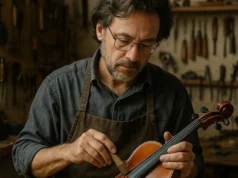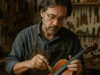

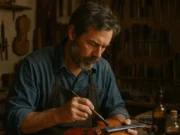
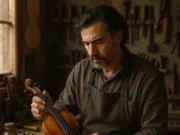
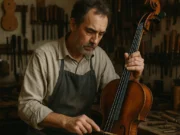
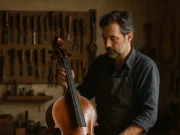
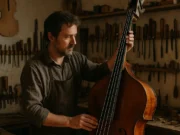
Cal Poly Humboldt is set to award an honorary degree to an individual renowned for pioneering contributions to cultural property studies and violin craftsmanship. This recognition spotlights a rare intersection of academic insight and artisanal expertise, underscoring the vital connections between cultural heritage, scholarly inquiry, and the art of instrument making.
Bridging Cultural History and the Art of Violin Making
In the classical music realm, the lineage of an instrument carries profound significance. Behind every violin, violinist, and performance lies a rich narrative of cultural context, preservation, and artistic transmission. The forthcoming honorary degree recipient has advanced our understanding of cultural property—how cultural artifacts, including musical instruments, embody identity and history in a world constantly shaped by legal, ethical, and aesthetic debates.
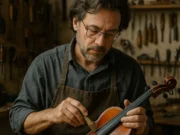
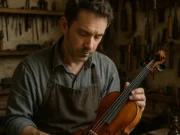
Their work delves deeply into the stewardship of cultural objects, a field concerned not only with preservation but also with the dynamic roles these objects play in contemporary culture and the economy. By merging scholarship with the practical skill of violin making, this individual has embodied a living connection between the tangible and intangible aspects of heritage, bringing theoretical concepts alive through the creation and restoration of fine instruments.
Impact on Performers, Makers, and Cultural Institutions
This dual expertise offers significant implications for musicians who rely on high-quality instruments steeped in tradition. It enriches the ecosystem encompassing performers, luthiers, scholars, and institutions—such as orchestras, museums, and cultural preservation organizations—who grapple with the complexities of provenance, authenticity, and conservation in their stewardship of musical heritage.
For violin makers, the integration of cultural property scholarship provides a nuanced perspective on craftsmanship, connecting instrument construction to broader dialogues about cultural identity, legal frameworks, and ethical acquisition. Students and academics benefit from this interdisciplinary approach by seeing how cultural heritage issues intersect with practical artistry.
Moreover, museums and cultural institutions tasked with curating collections of musical instruments find in this approach a model for balancing historical reverence with contemporary relevance. It encourages a holistic view that encompasses the socio-cultural circumstances shaping an instrument’s journey and its ongoing role in performance life.
Looking Forward: Expanding Conversations Around Cultural Property and Music
As the boundaries between academic research and practical craft continue to blur, this recognition at Cal Poly Humboldt signals a growing appreciation for interdisciplinary figures who can navigate and synthesize diverse realms of expertise. It encourages emerging musicians and makers to consider how cultural narratives shape their art and invites institutions to revisit how they engage with instruments not merely as objects but as carriers of living heritage.
The honorary degree serves not only as an accolade for a distinguished career but also as a beacon highlighting the intricate relationships that sustain the classical music tradition’s richness and meaning. Future collaborations inspired by this model could foster enhanced understanding and preservation strategies that honor both the scholarly and creative dimensions of musical culture.
Why this matters
- It recognizes an exceptional blend of scholarly and artisanal expertise that enriches understanding of musical heritage.
- The news is relevant to performers, luthiers, students, and cultural institutions engaged in preserving and advancing violin culture.
- The acknowledgement may inspire further interdisciplinary approaches connecting cultural property law and practice with music-making and instrument craftsmanship.
- It highlights the importance of viewing musical instruments as both artistic tools and cultural artifacts.
- Readers should watch for ongoing impacts on cultural heritage policies and educational programs integrating these fields.
Related topics
- The role of violin makers in preserving historical instrument legacies.
- Legal and ethical challenges in cultural property and musical instrument restitution.
- How interdisciplinary scholarship influences modern approaches to lutherie and musical heritage.
Editorial Commentary
Coverage related to violin making is important because instruments are never separate from the musical culture around them. Craftsmanship, tonal research, restoration practice, and workshop traditions all influence how performers experience and present sound.
In this context, stories connected to makers and workshops help readers see how the legacy of the $instrument_label is preserved, interpreted, and renewed through the work of contemporary luthiers and institutions.
About The Violin Post
The Violin Post is an international editorial platform dedicated to violin making, classical performance, competitions, instruments, and the wider culture of the string world.
Its coverage connects news reporting with specialist context for readers interested in performers, makers, educators, institutions, and musical heritage.
Related Articles
- Remembering Michael Jaumann: German Violin Maker and Expert Restorer (1966–2025)
- Artificial Intelligence and the Pernambuco Bow: Combating Illegal Logging by 2026
- Exploring Sustainable Alternatives to Pernambuco Wood in Violin Bow Making
— The Violin Post Editorial Staff