




























In the meticulous craft of string instrument maintenance, seemingly small components can have a substantial impact on performance and durability. Among these, the German style bass bow screw equipped with a copper ring stands out as a vital accessory for the upkeep and repair of double bass bows. This component is particularly relevant for performers, luthiers, and repair specialists devoted to the longevity and reliability of their instruments.
Functional Role of the German Style Bass Bow Screw
The bow screw, threading through the frog of the bow, allows fine adjustment of the bow hair tension—an essential function for dynamic control and articulation in playing. The German style screw, distinguished by its distinct mechanical design and threading, caters specifically to the double bass bow’s unique requirements. Its construction, including the incorporation of a copper ring, provides enhanced durability and smooth operation within the frog assembly.
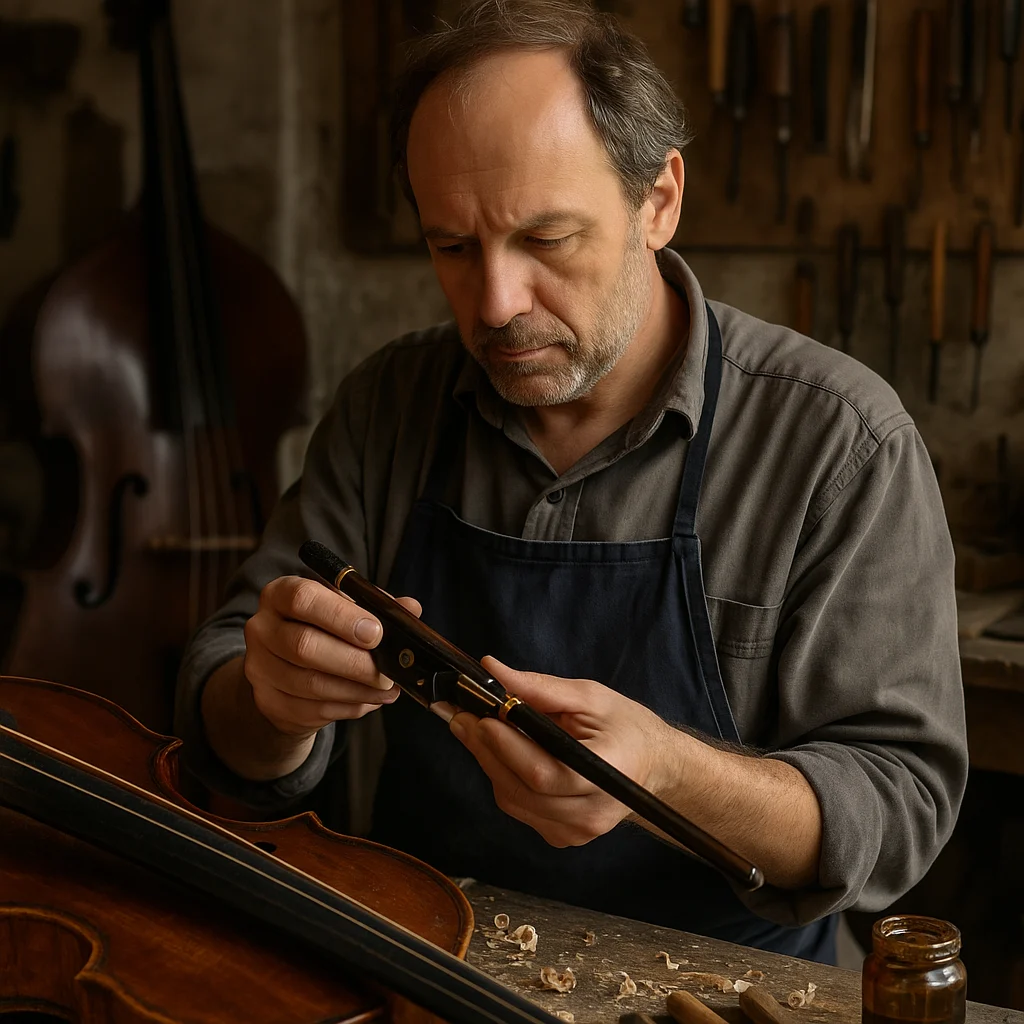
The copper ring is particularly significant as it acts as a bearing surface, reducing wear between moving parts and improving the screw’s longevity. This precise engineering detail reflects the close attention to material properties luthiers apply when addressing the demands of large string instruments like the double bass, where the mechanical stresses on the bow are naturally greater compared to smaller string family members.
Relevance to Performers and Luthiers
For bass players, a well-maintained bow screw ensures responsive tension adjustments and reliable bow performance, directly impacting the quality of tone and expression. Similarly, luthiers and repair technicians benefit from having access to robust, well-made replacement parts like these screws to maintain instrument integrity during repairs. The availability of specialized parts supports sustainable practices in instrument care by extending the usable life of bows and preserving their original construction features.
Moreover, expertise in selecting appropriate components is crucial in the broader ecosystem of classical music performance and instrument craftsmanship. It highlights the interconnectedness of artistry and technical maintenance, reminding us that the musical experience is upheld not only by the players but also by the intricate craftsmanship behind their tools.
Why this matters
- Precision components like the German style bass bow screw contribute vitally to bow functionality and musician control.
- They affect a range of stakeholders including performers demanding reliable gear, luthiers engaged in quality repairs, and institutions managing instrument collections.
- Understanding these parts sheds light on the technical underpinnings necessary for high-level string performance.
- They promote sustainable instrument care through the availability of durable and compatible replacement parts.
- Readers should watch for innovations in bow maintenance components that balance tradition and improved material technology.
Related topics
- The impact of bow mechanics on playability and sound in lower string instruments.
- How material choices in bow making influence the durability and performance of string bows.
- The role of specialized repair parts in the lifespan and value preservation of classical instruments.
Editorial Commentary
Instrument-centered articles are valuable because they connect sound, materials, construction, and performance practice. For specialists and enthusiasts alike, they provide insight into the physical objects that stand at the heart of musical interpretation.
Read in a broader way, this type of story helps explain why the history and evolution of the $instrument_label still matter today to makers, performers, collectors, educators, and serious listeners.
About The Violin Post
The Violin Post is an international editorial platform dedicated to violin making, classical performance, competitions, instruments, and the wider culture of the string world.
Its coverage connects news reporting with specialist context for readers interested in performers, makers, educators, institutions, and musical heritage.
Related Articles
- The Presence of Guarneri Inspirations in Canterbury’s Musical Landscape
- The Disappearance of a Priceless 18th-Century Italian Double Bass
- Natural Rosin Innovations: Enhancing String Instrument Performance with Low-Dust Formulations
— The Violin Post Editorial Staff